
Why It Makes Me Smile When Someone Says, "There's a Bug in My Flowers"
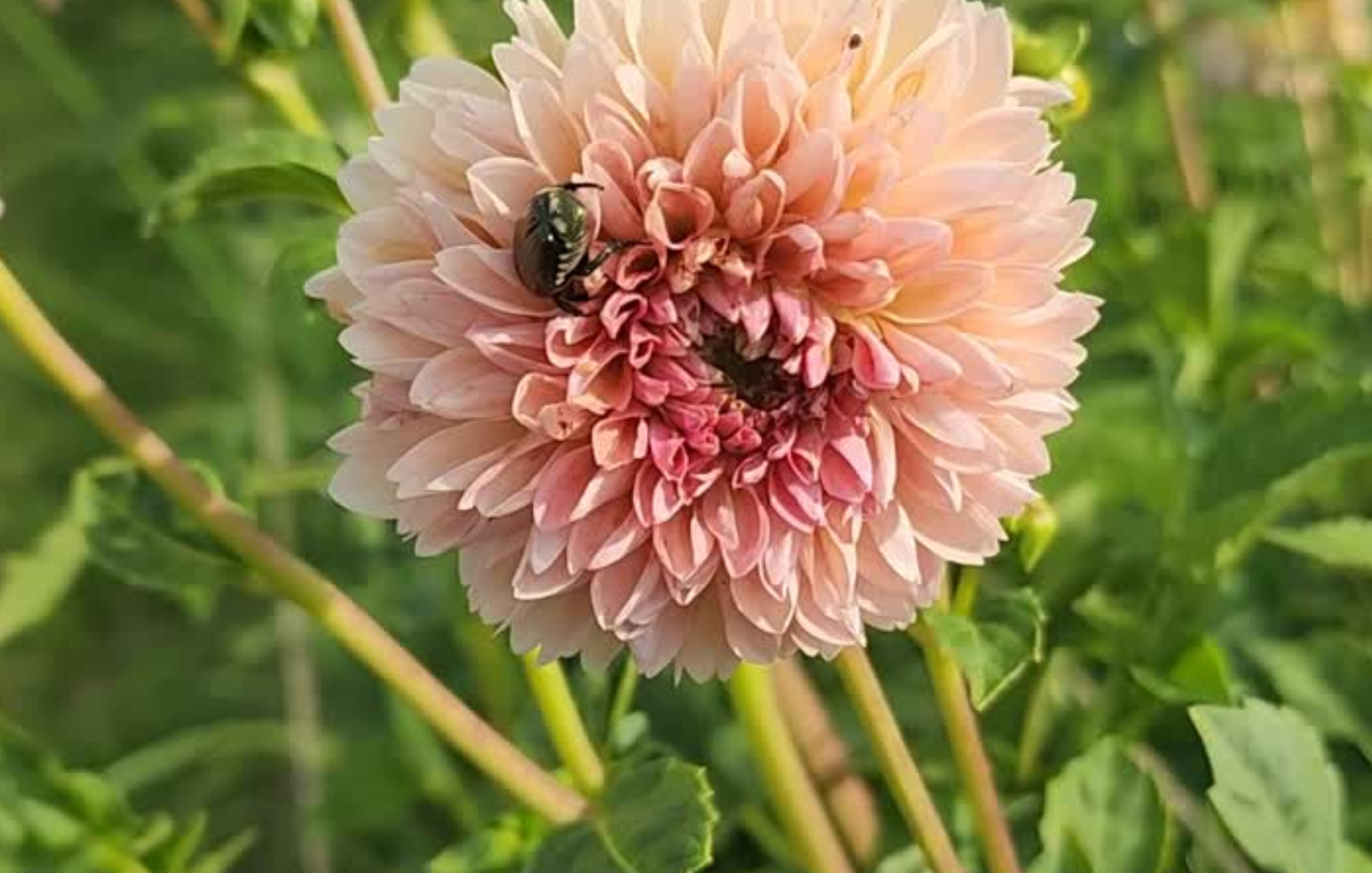
It always makes me smile when someone says, "But there's a bug in that one."
Not because I enjoy surprising people with unexpected hitchhikers, but because, in a strange way, it tells me we are doing something right.
A tiny spider, a ladybug, my arch nemesis, the Japanese beetle, or some other little visitor in a bouquet means our flowers are part of a living ecosystem. They have shared space with bees, dragonflies, butterflies, and all the beneficial insects that make healthy gardens possible. Those little visitors are a reminder that flowers don't grow in sterile factories. They grow in fields, under sunshine, surrounded by life.
And honestly, I'd be more concerned if there wasn't a bug.
Most people have no idea where their flowers come from or what it takes to get them here. Flowers are beautiful, but they also have a story. And increasingly, people want to know that story.
Most Flowers Aren't Local
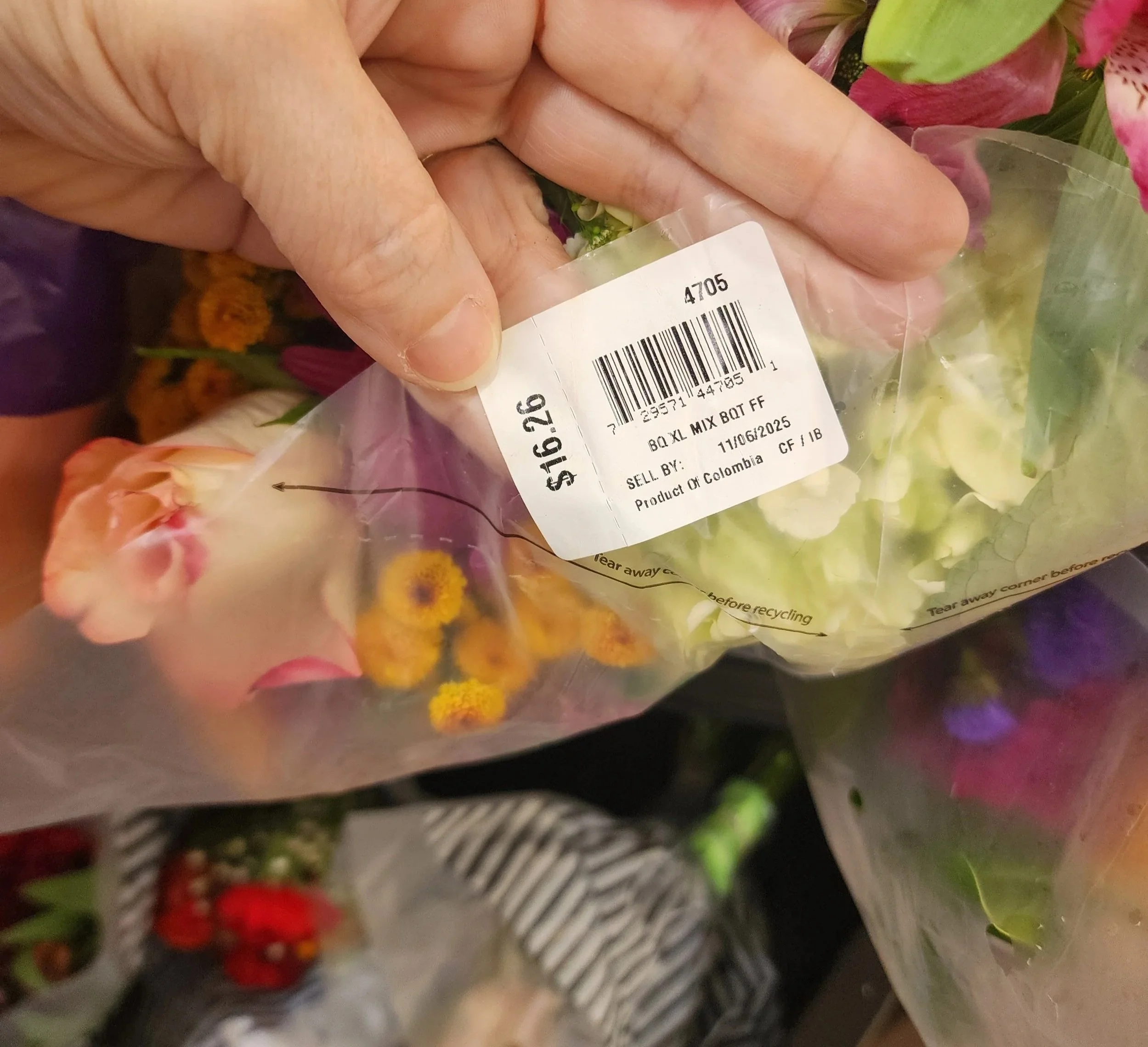
Imported flowers from Columbia
According to the U.S. Department of Agriculture, approximately seventy percent of flowers sold in the United States are imported. Most of those flowers come from Colombia and Ecuador.
Think about that for a moment.
The bouquet sitting on the table at your grocery store likely traveled thousands of miles before arriving in your hands. Those flowers have been cut, refrigerated, transported, inspected, and moved through multiple distribution channels before finally reaching a vase.
That long journey presents a challenge.
Not only do imported flowers need to survive days or weeks in transit, but they also must meet strict regulations regarding foreign pests. A shipment found to contain prohibited insects or diseases can be rejected, creating enormous financial losses.
As a result, growers often rely heavily on fungicides and insecticides throughout production and shipping.
What Studies Have Found
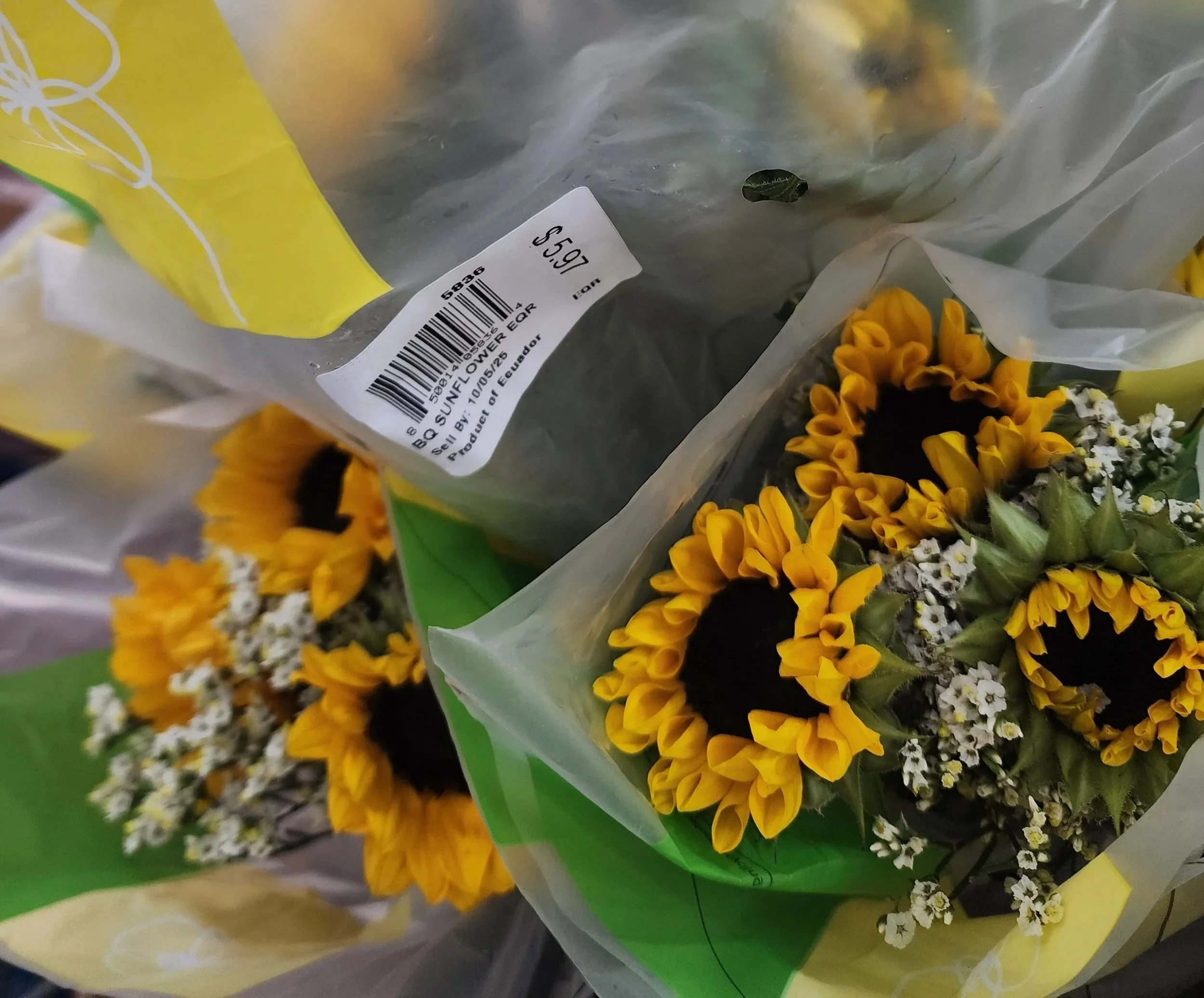
Imported flowers from Ecuador
One study published in 2017 found that florists had residue from around 111 different pesticide compounds on their gloves after just one day of handling flowers.
Researchers also discovered that pesticide residues on imported cut flowers could be dramatically higher than what is permitted on food crops, largely because those same regulations do not apply to ornamental flowers.
While we don't eat bouquets, we certainly handle them, arrange them, and place them on our dining room tables.
Blossom and Branch Farm has an excellent article discussing these findings and the broader sustainability concerns surrounding imported flowers. I highly recommend reading it if this is a topic that matters to you.
This Isn't About Fear
I don't share this information to make anyone afraid of grocery store flowers.
I've bought grocery store bouquets myself.
And this also isn't about guilt.
It's about awareness, safe handling, and knowing we have a better option when we shop local.
If you do buy imported flowers, just remember that those chemicals are still on the petals and stems. Even if they are flowers that normally might be edible, remember, the only safe way to do that is to buy local from someone you trust or grow them yourself.
And lastly, always wash your hands after handling imported flowers to keep those harmful chemicals off your skin.
Why We Choose Local
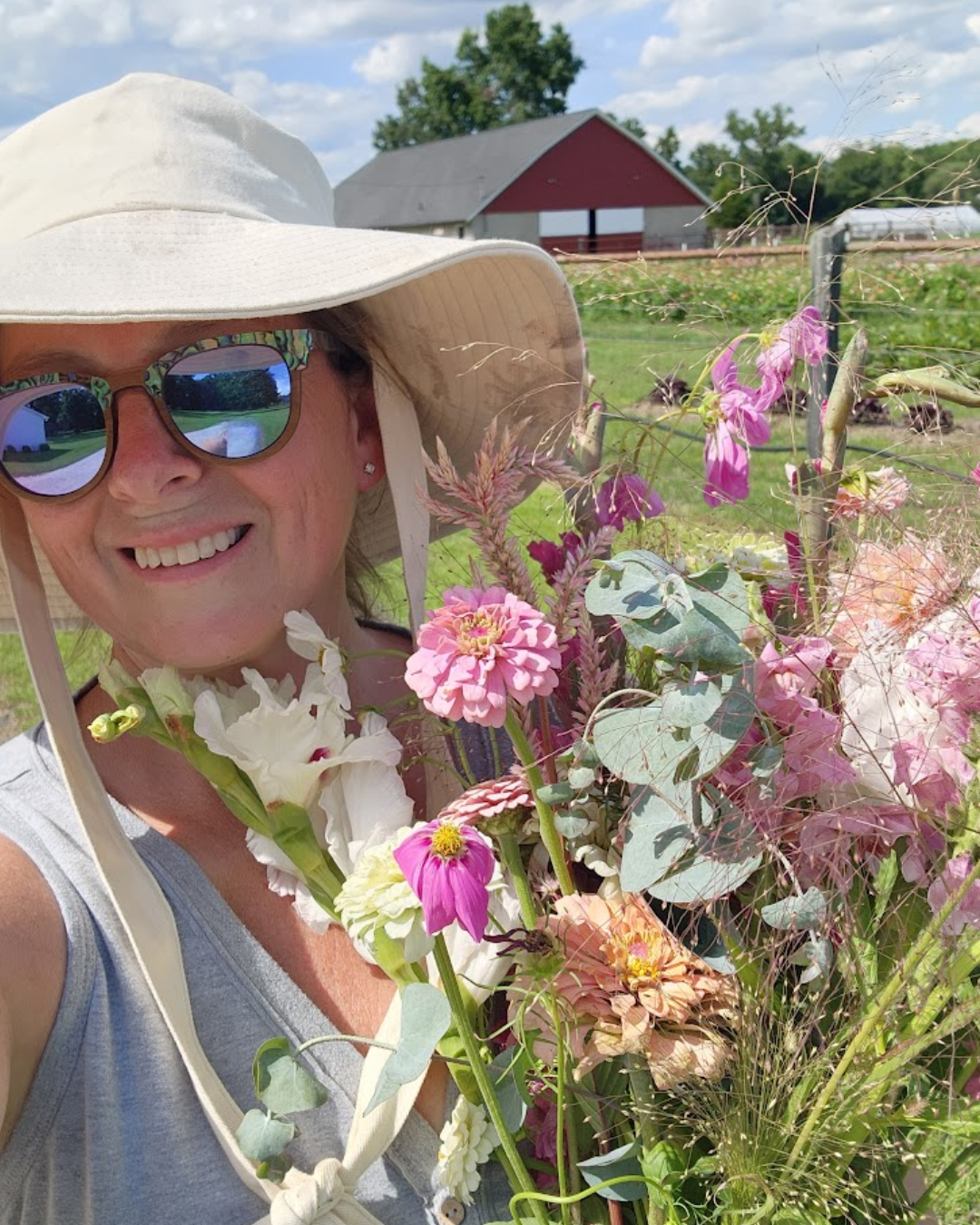
Hi! I’m Misty, ask me anything about our flower farm.
Aside from how much more natural and fresh local flowers are, one of the things I love most about getting them locally is transparency.
When you buy from a local flower farmer, you build trust with them and know you can rely on them for good, clean flowers and food. And since you have direct access to them, you can also ask them questions that are important to you such as:
Do you spray with any harmful synthetic chemicals?
No, but we do have a habit of knocking Japanese beetles into a soapy, warm bath to keep them under control.
What do you fertilize with?
We love using organic seaweed and fish emulsion. Just good old natural stinky fish stuff. It smells awful, but the flowers love it.
What varieties are in season?
The best way to find out about that is to check our Facebook page. We post regularly to show you exactly what is growing at the time, but I’m happy to discuss timelines when you can come visit in person as well.
The point is…when you buy locally, you actually get to know the person growing your flowers.
Here at Hickman Hollow Farms, we certainly aren't perfect. We battle bugs, weeds, drought, and diseases just like every other grower. Sometimes you'll even find a tiny spider that hitched a ride home in your bouquet.
And that's okay.
Because we'd rather work with nature than against it.
So, Do We Use Synthetic Insecticides?
The answer is…no, we go a different direction.
Look I get it, bugs can be a problem. I remember the first time I saw my leaves turning into what looked like lace because they were being munched on regularly, and my first thought was to reach for some Seven. Instead, we have decided to work with nature instead of against it.
We rely on beneficial insects to help us with pest problems and encourage a healthy ecosystem in the flower fields. Ladybugs, lacewings, and other helpful insects are often far better allies than a spray bottle.
And then there's my homemade "flower salsa."
I'm only half joking.
One of my favorite tricks for keeping pests from turning my zinnias into an all-you-can-eat buffet is a concoction made from garlic, onions, jalapeño peppers, a little Castile soap, and water. I whip it all up into a concentrate, dilute it, and spray it on the flowers. It smells suspiciously like something that belongs next to tortilla chips, although I strongly recommend against trying it.
You could try this on your own with other liquid soaps, but I recommend using Castile soap because it's plant-based, has no synthetics, and is fully biodegradable. Just chop an onion, two heads of garlic, 2 jalapeno peppers and put into 1 gallon jar. Squeeze in a little of the liquid Castile, fill the rest of the way up with water, and close the lid. Let it sit a full 24 hours, then strain out the chunky stuff, leaving you with beautiful spicy gold liquid magic. Use it by diluting it with water in a 1:1 ratio before spraying.
The bugs aren't fans, and honestly, if I sprayed that on my dinner, I'd stay away too. If you do this in your own garden, I also recommend using eye protection if it’s a windy day or you may end up in tears…ask me how I know.
The flowers tolerate the temporary salsa aroma for a day or two, and then everybody moves on with life. It's not a perfect solution, but farming rarely is. Sometimes keeping flowers healthy means thinking less like a chemist and more like someone's grandmother who believes garlic fixes everything.
And around here, I'd much rather explain why the flowers smell faintly like taco night than explain why they needed a cocktail of harsh chemicals.
Does that mean our flowers are perfect?
Absolutely not.
In fact, you might occasionally find evidence that bugs have enjoyed our flowers almost as much as we do. A leaf with a nibble taken out of it or a tiny spider hitching a ride home isn't a sign that we've failed.
To me, it's a reminder that these flowers grew outside, under the sun, among bees, butterflies, and all the life that belongs in a healthy ecosystem.
And honestly?
I'd rather explain a bug than explain 111 pesticides.
Buy Local Whenever You Can
The best way to avoid mystery chemicals isn't complicated.
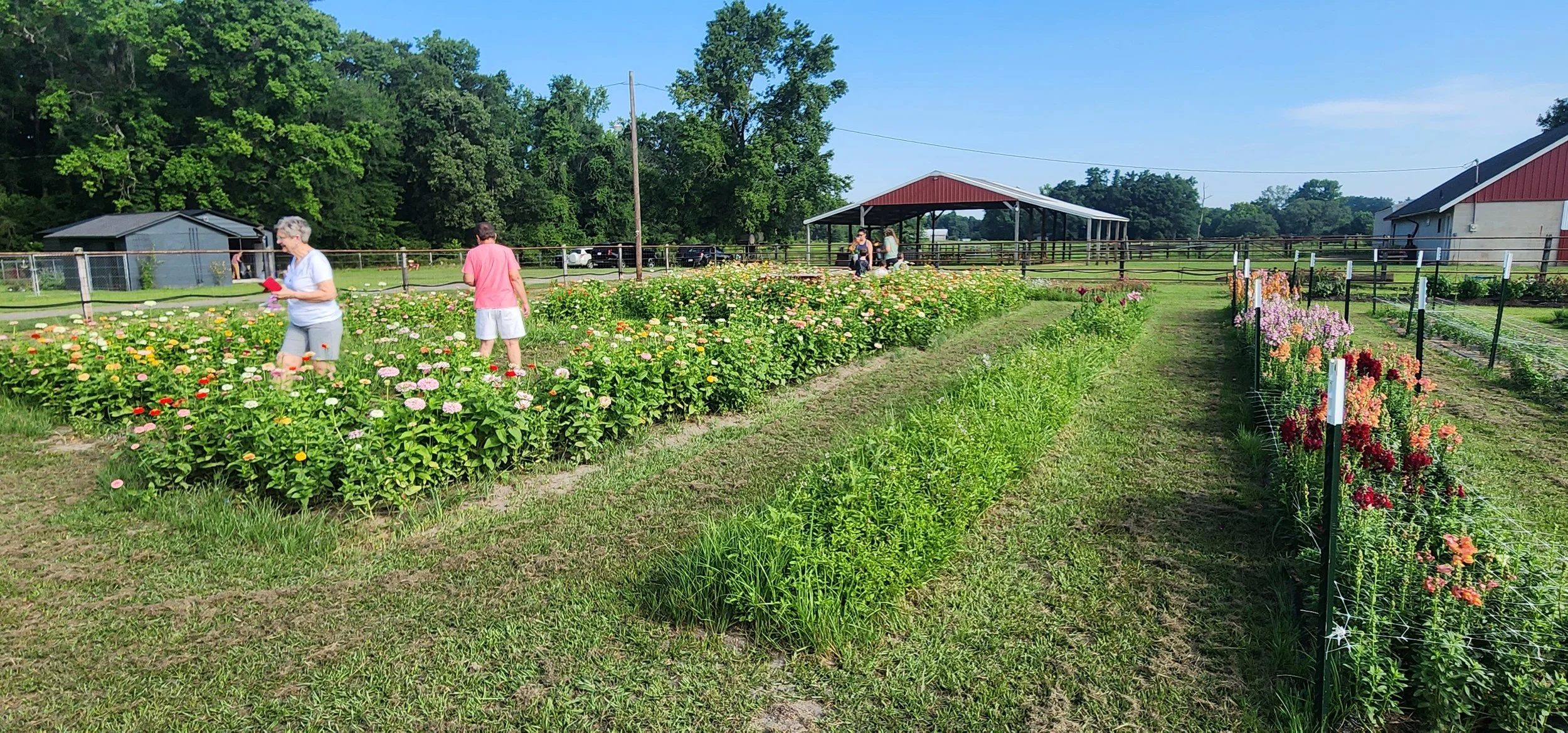
If you’re in Florence, Columbia, Charleston, Myrtle Beach, you’re close enough to visit Hickman Hollow Farms at one of our u-pick events, and that is a great way to ensure your flowers come to your table clean of chemicals. Check our events page for information.
But even if you aren’t local to us, buy local and support flower farmers in your community. Ask questions and get to know the people growing your flowers.
Enjoy flowers that haven't spent weeks traveling thousands of miles.
And if you happen to find a little bug tucked between the petals? Just gently escort your tiny visitor back outside and smile.
Because that little bug might just be proof that your flowers came from a place where nature is still welcome.
