
Goldenrod, Sunflowers, and a Little Trust at Hickman Hollow
From the Gardener’s Journal
The Gardener’s Letter No. 05
Dearest friend of the Hollow,
There are weeks when the farm seems determined to remind me that first impressions are not terribly reliable.
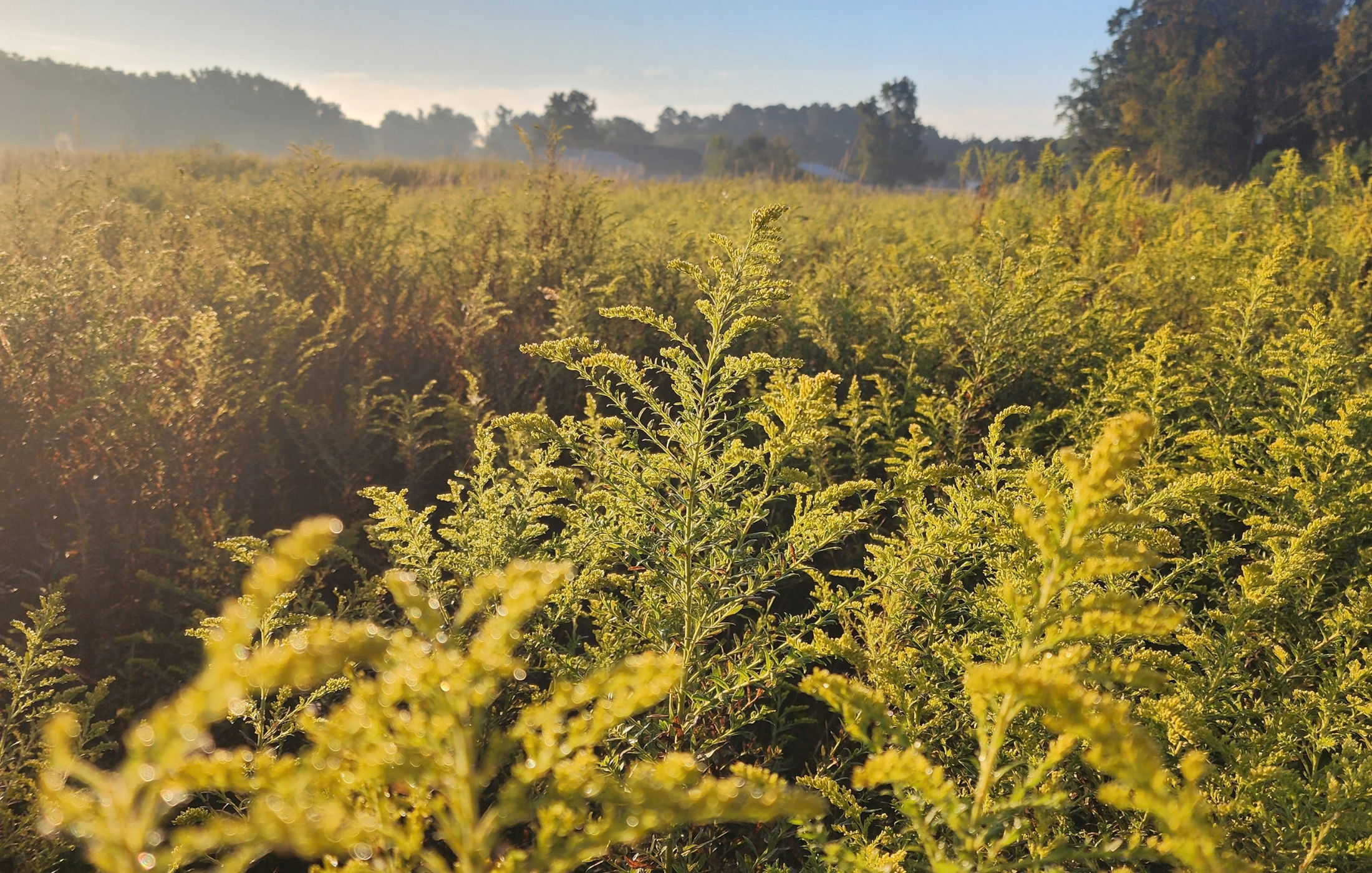
A field I once looked at and thought, allergies, turns out to be one of the most special but often ignored places on the farm.
A sunflower planting that had me worried during the heat has suddenly begun filling itself with colors that look as though autumn wandered into the field with a paintbrush.
And four little sheep who once regarded me with considerable suspicion have decided that perhaps I am trustworthy after all.
Maybe that is the story of this week.
Look a little closer at the little things. The Hollow has been asking me to do quite a lot of that lately.
The Field I Used to Blame
Massive billowy sweeps of the warmest yellow have taken over the back fields, and on Saturday I found myself having conversation after conversation about it with people who came to visit.
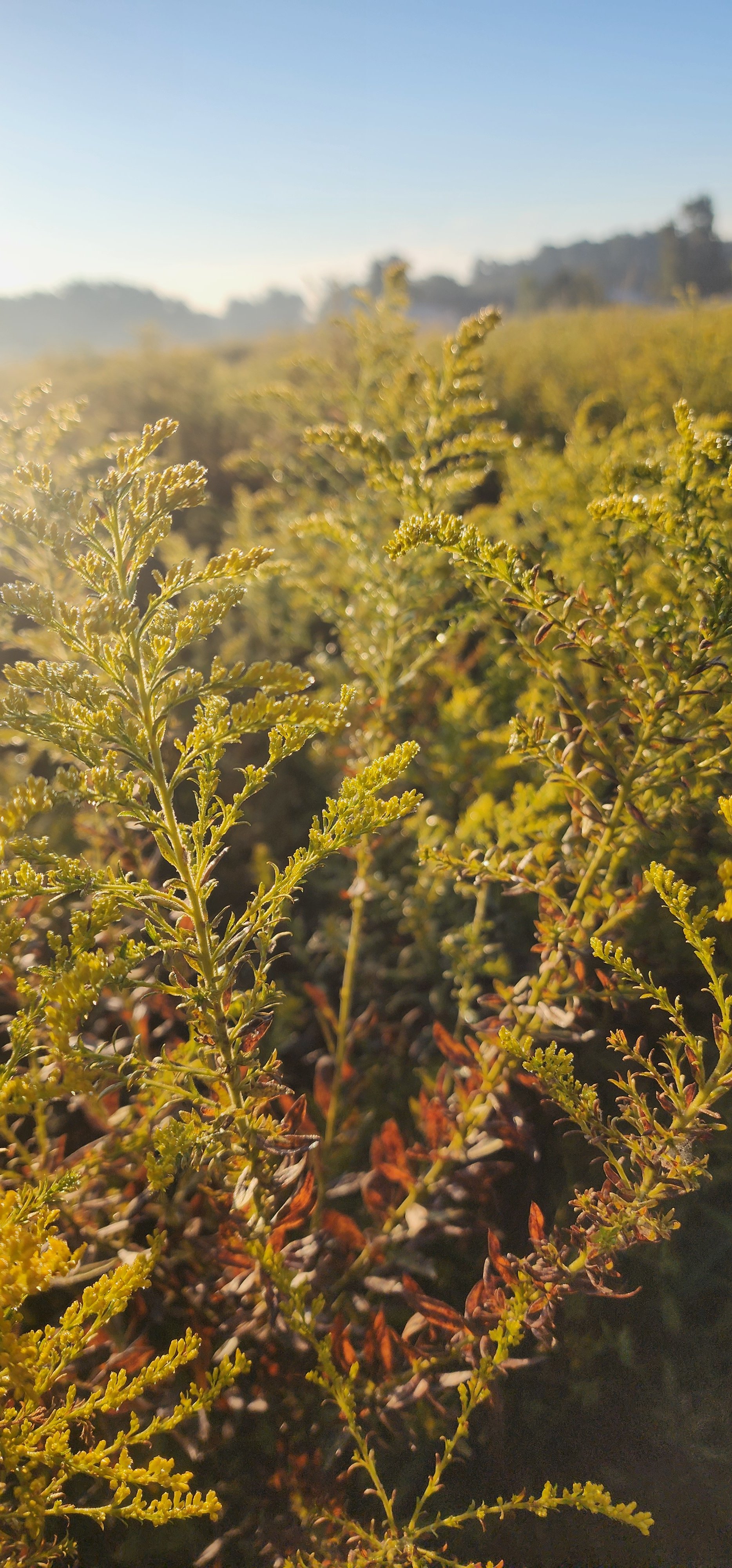
I must admit, I was surprised at how many people already knew there was more to goldenrod than the plant that is so often blamed for fall allergies.
After all, for years, I made the same assumption.
Goldenrod blooms. I sneeze. Case closed.
Except nature is rarely that simple.
What many don’t know is that it’s ragweed, not goldenrod, that causes most people’s allergies. They often grow right next to each other and even look very similar to someone unfamiliar with them.
Ragweed is one of the major causes of fall seasonal allergies. Its pollen is lightweight and easily carried through the air, and because ragweed and goldenrod bloom around the same time and often close by, that very visible field of yellow flowers has earned itself quite a reputation.
These days, I look at our goldenrod very differently. I see it for its long history of traditional herbal use to relieve congestion, reduce mucus, and to dry up the sinuses.
That does not mean everyone can safely use goldenrod. Goldenrod can cause allergic reactions in some people, particularly those with sensitivities to plants in the Asteraceae family. So it’s always best to do your research and discuss with your doctor.
This year, I was able to harvest it right here at Hickman Hollow and make a tincture that I will use as part of my own herbal practice all during the fall allergy season. And yes, I even made enough to get myself through Spring allergies.
I harvest the flowers fresh, usually toward the middle or end of the day so they are not wet. I tuck those golden flowers and some of the leaves into a jar, cover everything completely with high-proof alcohol, usually an inexpensive vodka, and then let the jar sit for about a month.
Then it’s as simple as straining the tincture into another bottle and giving a small dose under my tongue twice a day.
But the goldenrod or the tincture was not actually my favorite part of the goldenrod conversations Saturday. The people were.
It felt wonderful to stand in the field talking with people who are genuinely interested in plants, herbs, and the traditional ways people have used what grows around them.
It gave me hope.
Sometimes I wonder whether these old skills still have a place in our very modern world. Whether people still want to know what is growing beside the fence. Whether anyone still wants to learn how people once took what the land gave them and turned it into something useful.
Saturday showed me that they do.
There are still people curious about the plants growing around them. People who want to understand traditional preparations and old skills rather than allowing that knowledge to disappear.
I think part of what we are growing at Hickman Hollow is not something we can harvest at all. Maybe we are also keeping a little knowledge alive.
Perhaps goldenrod never needed defending. Perhaps it just needed us to look closer.
What the Heat Could Not Keep
While the back fields have gone gold, the flower fields have welcomed the warm colors of our sunflower blooms. And my goodness, they are beautiful.
The field almost feels a little vintage to me right now.
It is not perfectly manicured. It is worked and a little ragged around the edges, exactly as a flower field near the end of a long South Carolina growing season probably ought to be.
But step inside, and the colors are warm and welcoming.
There are yellows and oranges, but also reds, plums, peaches, and creamy whites. They look like autumn somehow found its way into a sunflower.
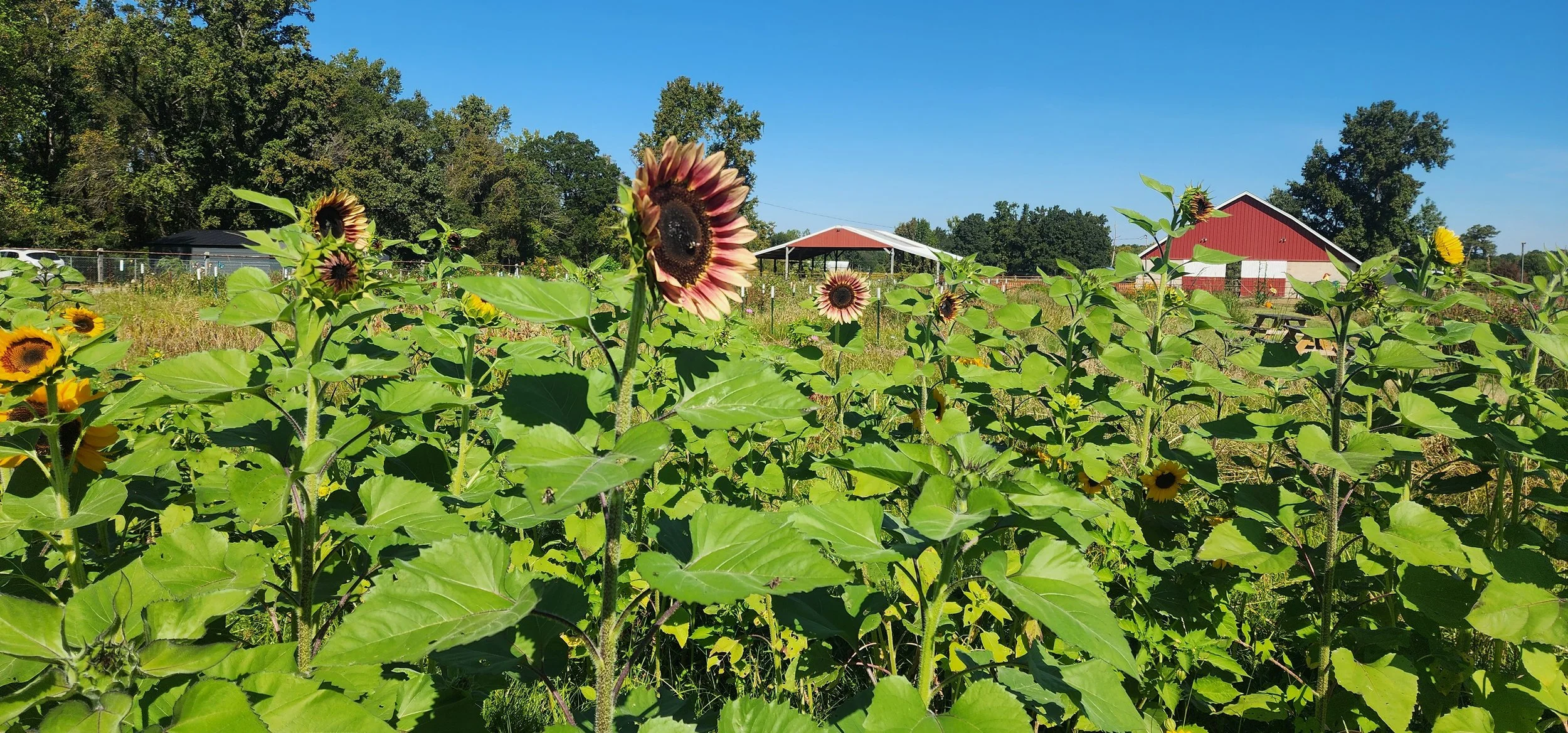
Getting here was not quite as effortless as the flowers make it appear.
The heat slowed our germination, so the field is not blooming the same as our earlier sunflower crop. Some plants are still catching up while others have apparently decided it is their time to shine.
The Gardener has opinions about this.
The Keeper appears entirely unconcerned.
I suspect his argument would be that a flower blooming later than I planned is not the same thing as a flower being late.
I dislike when he has a point.
There are still hundreds of sunflowers waiting in that slightly ragged, beautifully imperfect field, and this Saturday they are ready to become bouquets.
Sometimes the garden does not give you the picture you had in your head. Sometimes it gives you something with a little more character.
Four Little Acts of Trust
And then there are the sheep.
If you read last week's letter, you may remember that my relationship with our newest residents recently involved considerably more running than I anticipated.
This week was quieter.
I have spent every day with the sheep, trying my best to get them to eat from my hand or let me get close enough to sneak a quick pet. I’ve been totally unsuccessful until this week. And it was the tiniest one that started it. Of all four sheep, our youngest and smallest was the first to decide I might be worth trusting. And then suddenly, all of them were surrounding me and eating from my hand.
That little moment got me.
And that same tiny baby who was once so unsure about me is becoming comfortable enough that she will even let me scratch underneath her chin.
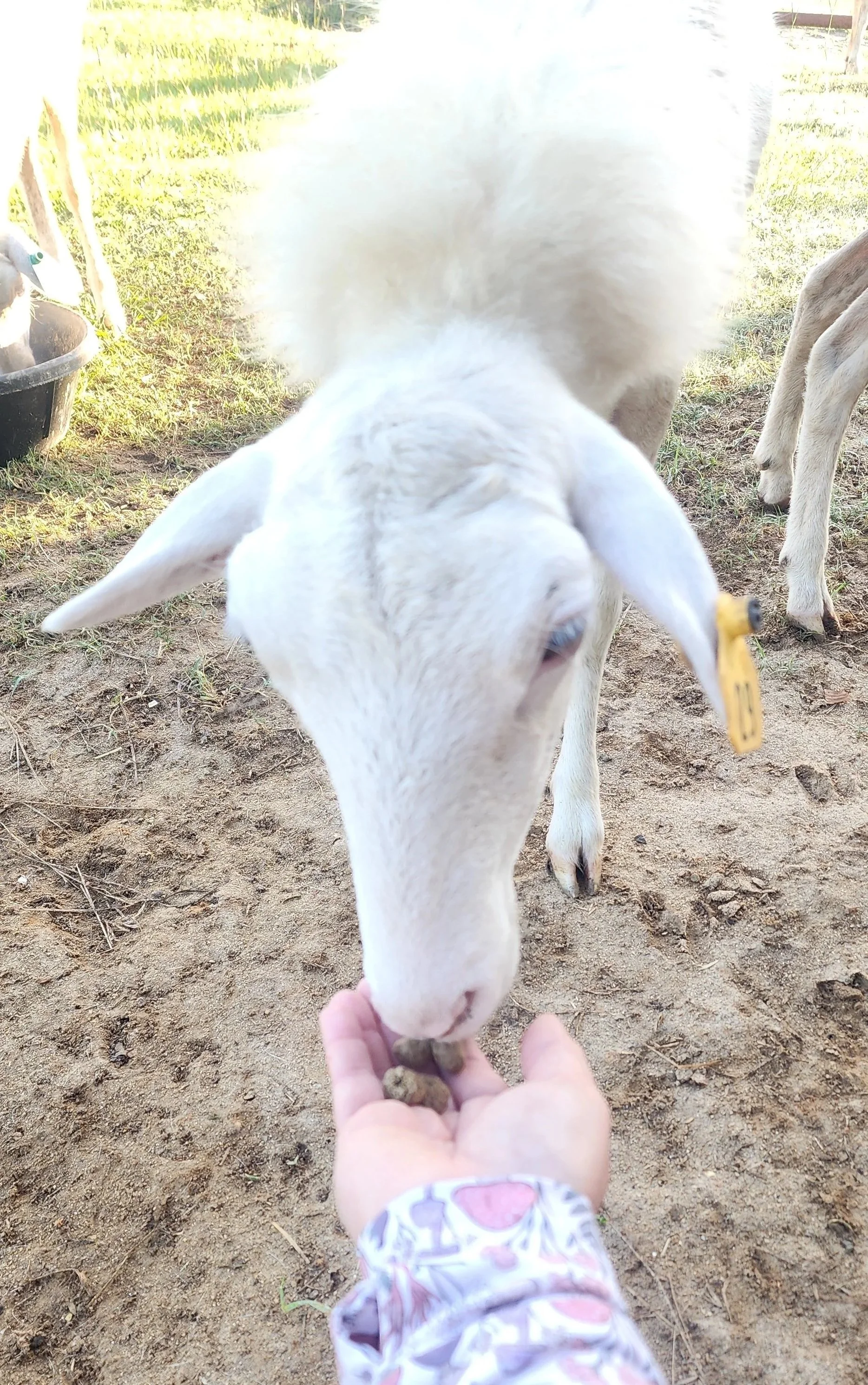
We are beginning to see their personalities too.
Our oldest girl is the reserved one. She seems to have appointed herself mother of the group and will happily scoot everyone away when someone unfamiliar gets too close.
The other older girl has a little more spunk and is very food motivated. She is cautious, right up until she realizes you are holding something delicious.
Apparently courage sometimes comes in snack form.
The two babies are both sweet and still a little skittish, although our youngest seems to be changing almost every day.
Watching them begin to trust us is enough to make me happy.
But there is another reason I have been standing out there with treats in my hand.
I keep thinking about the children who will visit Hickman Hollow.
Especially the littlest ones.
Someday I want a little hand to stretch out with a treat and feel the soft nose of one of these sheep reach toward it.
I want to see that child's face when it happens.
So every time one of the sheep takes something from my palm, we are practicing for someone who has not arrived yet.
Maybe the Keeper would call that preparing a place.
I think I am beginning to understand why he does so much of it.
There Is One Problem
We cannot keep calling them the sheep. Especially now that their personalities are starting to show.
They need names.
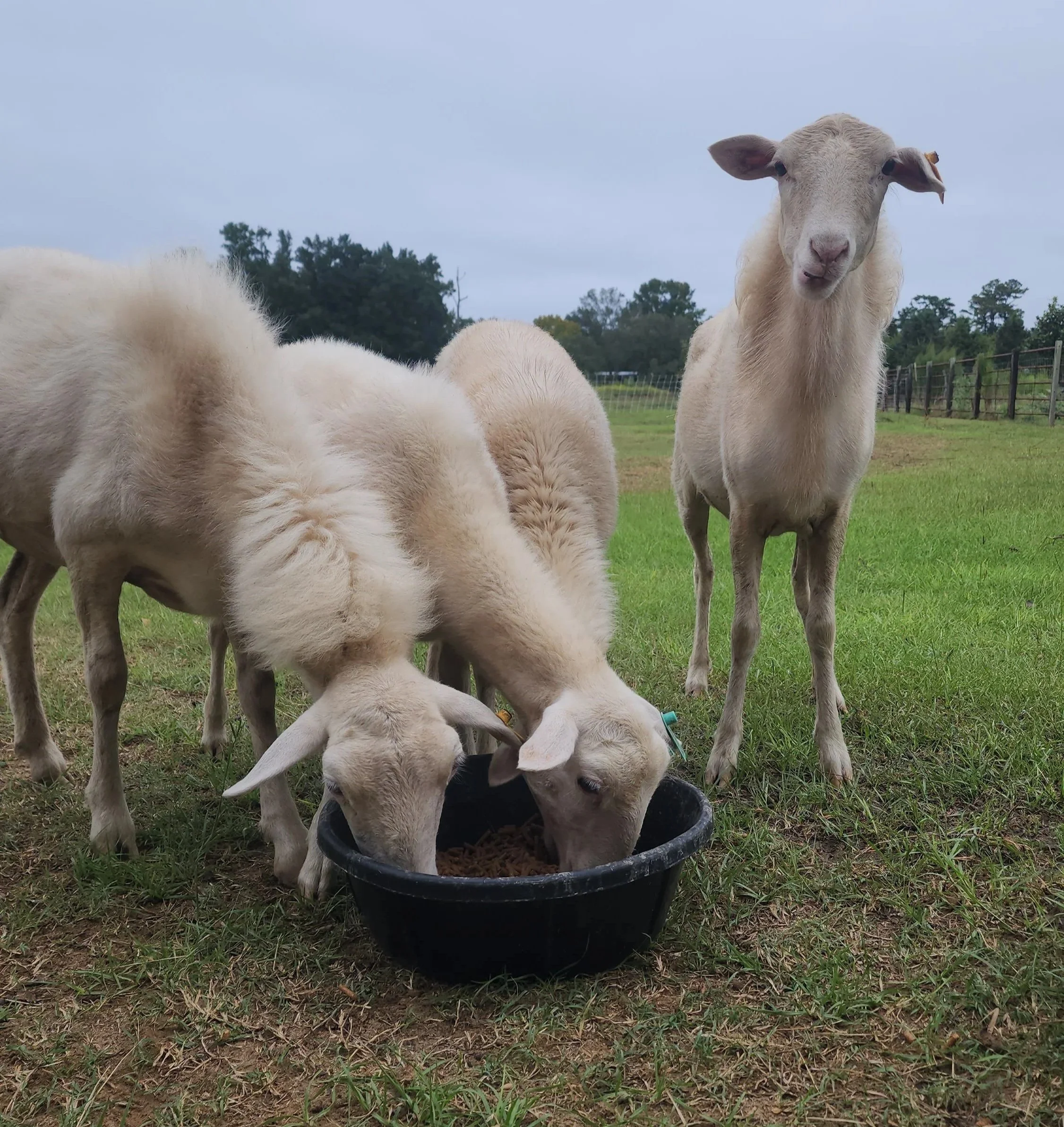
And we could really use your help in doing that. Later today, I will be sharing a post where you can leave your ideas.
And if you come to the farm Saturday, spend a few minutes watching the girls before you decide.
There is the reserved mother of the group.
The slightly spunky one whose bravery increases dramatically in the presence of food.
And two sweet babies who are still figuring all of us out.
One of them just might let the Gardener scratch beneath her chin.
The Wrens undoubtedly already have names for all four.
Unfortunately, they remain unwilling to disclose them.
Something to Take Home
If there is one thing I hope you take with you from my letter this week, it is this:
Do not be too quick to dismiss the plants growing around you.
Learn their names first.
If autumn arrives and your allergies flare while goldenrod is blooming everywhere, do not automatically assume the bright yellow flowers are responsible. Ragweed is a major source of fall allergy pollen, and allergy testing is the appropriate way to determine what an individual is actually reacting to.
But even if you never make a tincture in your life, there is value in knowing what grows around you.
Learn one plant.
Learn what visits it.
Learn what people traditionally did with it.
Learn what modern research does and does not tell us about it.
Then teach someone else.
Maybe that is how these little pieces of knowledge survive.
This Saturday at the Hollow
The sunflower field is finally blooming, and so is a brand new succession of orange cosmos and colorful zinnias. This Saturday is a wonderful time to wander into it and cut some of those reds, plums, peaches, whites, yellows, and oranges for yourself.
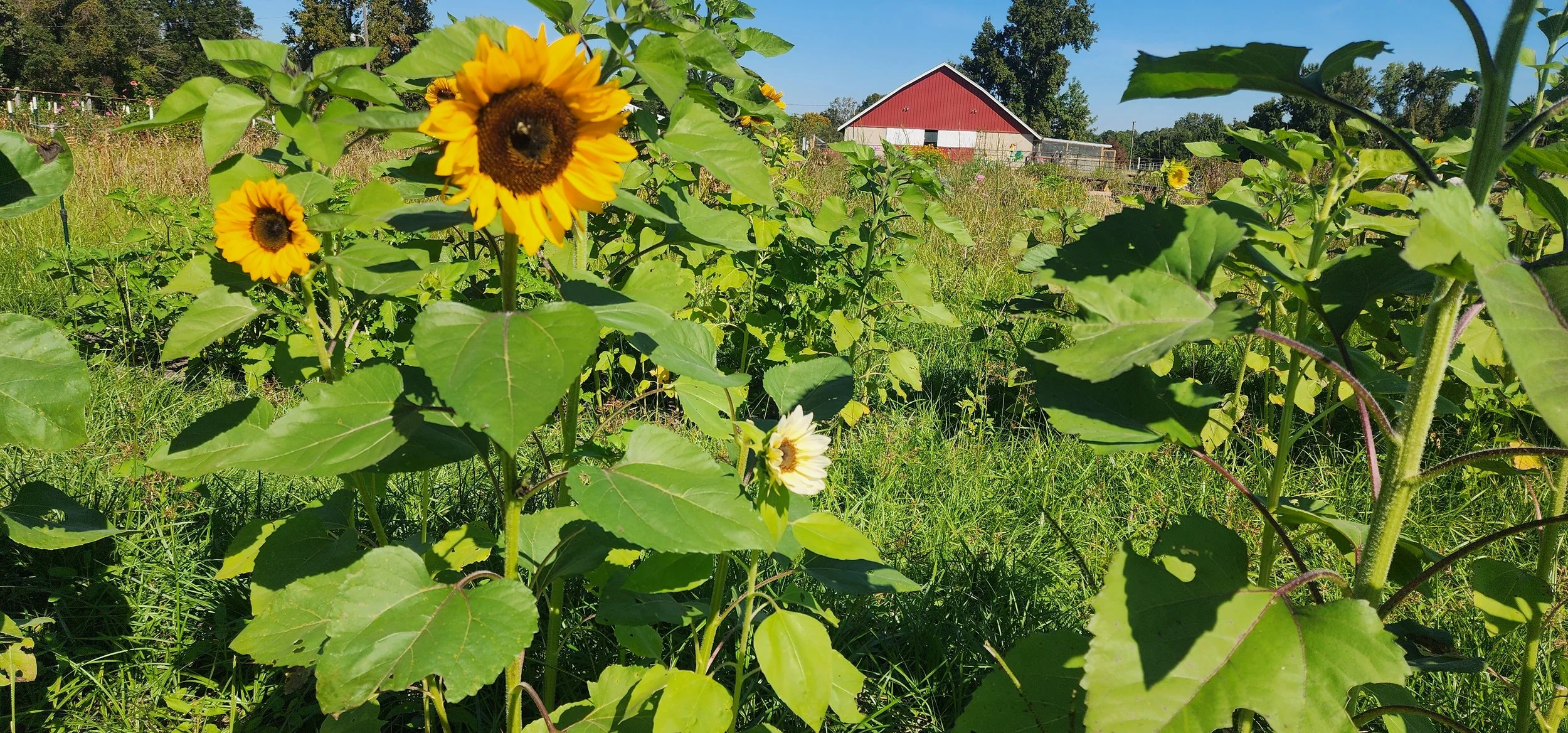
U-Pick will be open Saturday from 9 AM to 2 PM, with our regular $20 cup and $40 bucket options.
And if you have been telling yourself you will come out one more time before the season ends, I would not wait too long.
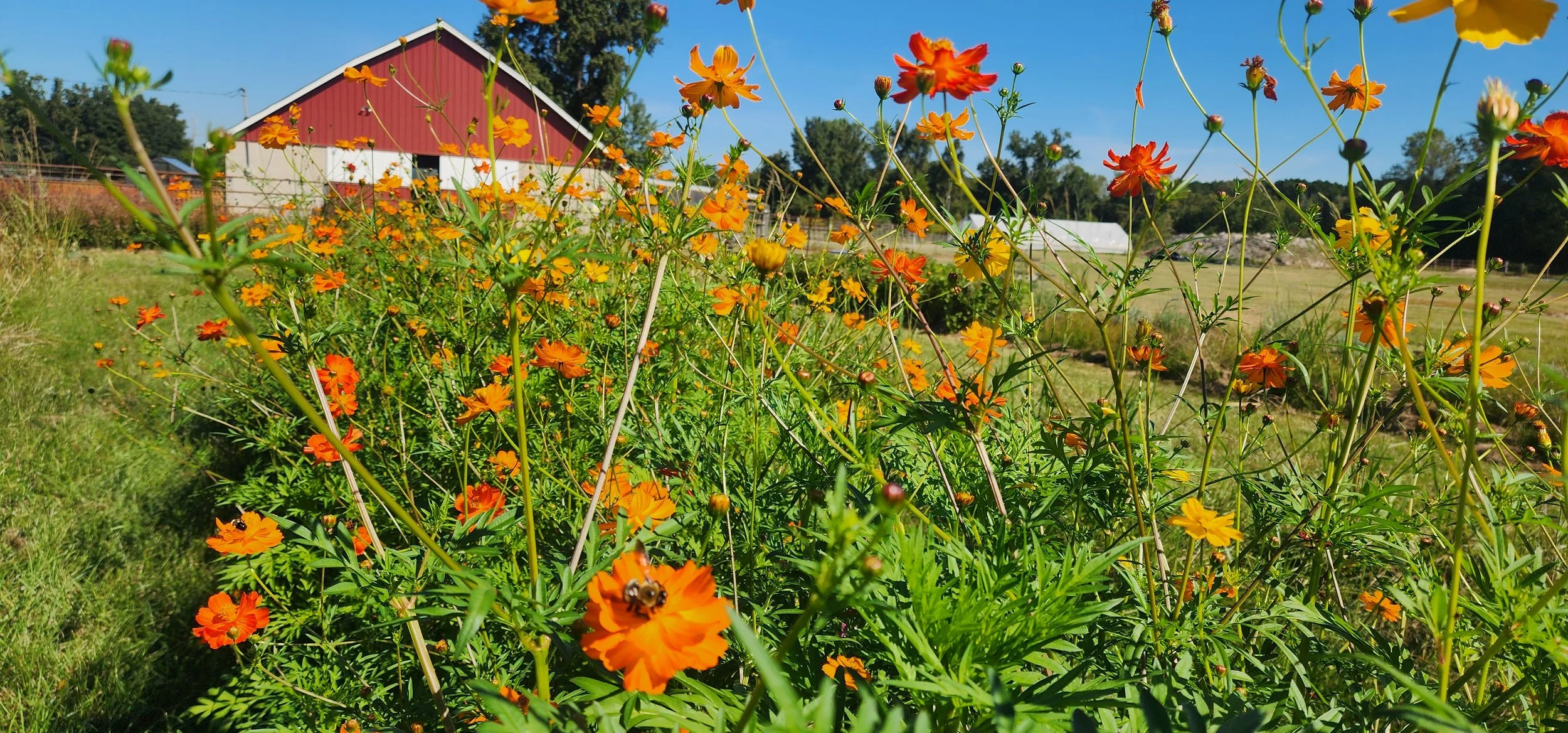
We do not actually know which Saturday will be our last. I am hopeful for 2 or 3 more weekends, but from here on out, the weather gets a vote.
There may not be a tidy announcement that says, This is it. Come pick the final flowers of the year.
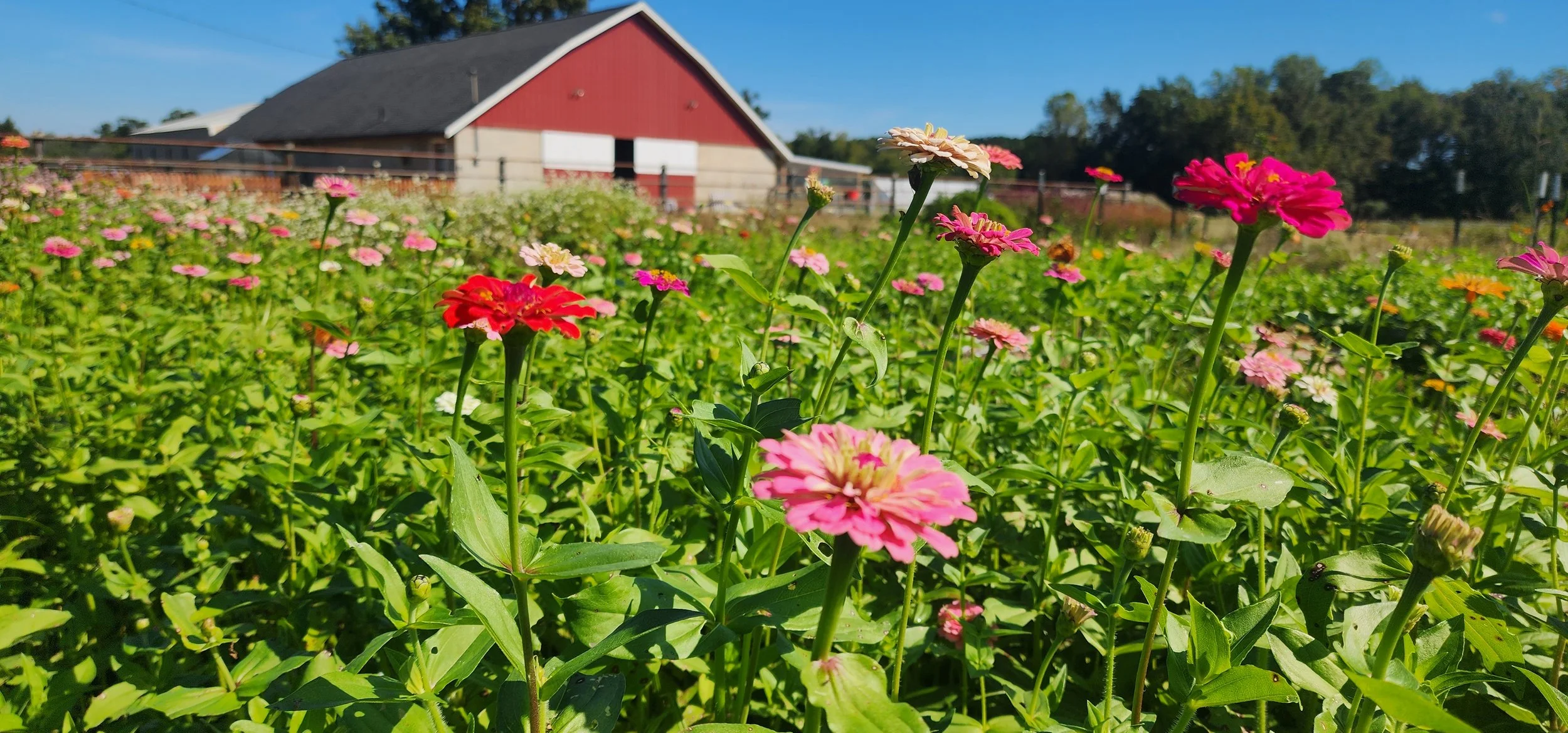
One cold turn in the weather may simply decide it for us.
So come while the sunflowers are blooming. Fill a cup or bucket with color. Spend a little time watching four nameless sheep in the pasture.
The Hollow keeps its own calendar.
Apparently, it has declined to share the closing date with the Gardener.
Until we meet again,
P.S. The Wrens would like everyone to know that they have always understood goldenrod perfectly well.
They are being insufferable about it.
