
August at Hickman Hollow Farms
Holding On to Summer While Planting for Spring
August felt like a month caught somewhere between two seasons.
Summer is definitely still here. South Carolina has made absolutely certain we understand that. The heat has been relentless at times, the flower fields are tired, and some of the plants that looked unstoppable earlier this summer are beginning to show their age.
But at the same time, my crazy busy brain has already moved ahead.
I can’t stop thinking about cool mornings, ranunculus, daffodils, snapdragons, campanula, and tiny lisianthus seeds that will eventually become flowers next spring.
That's one of the strangest and also exciting things I'm learning about farming. You are almost never living entirely in the season you're standing in. While you're harvesting one season, you're preparing for another.
August has been a beautiful reminder of that.
When Summer Starts Showing Its Age
There is a point every summer when the flower field begins to look tired.
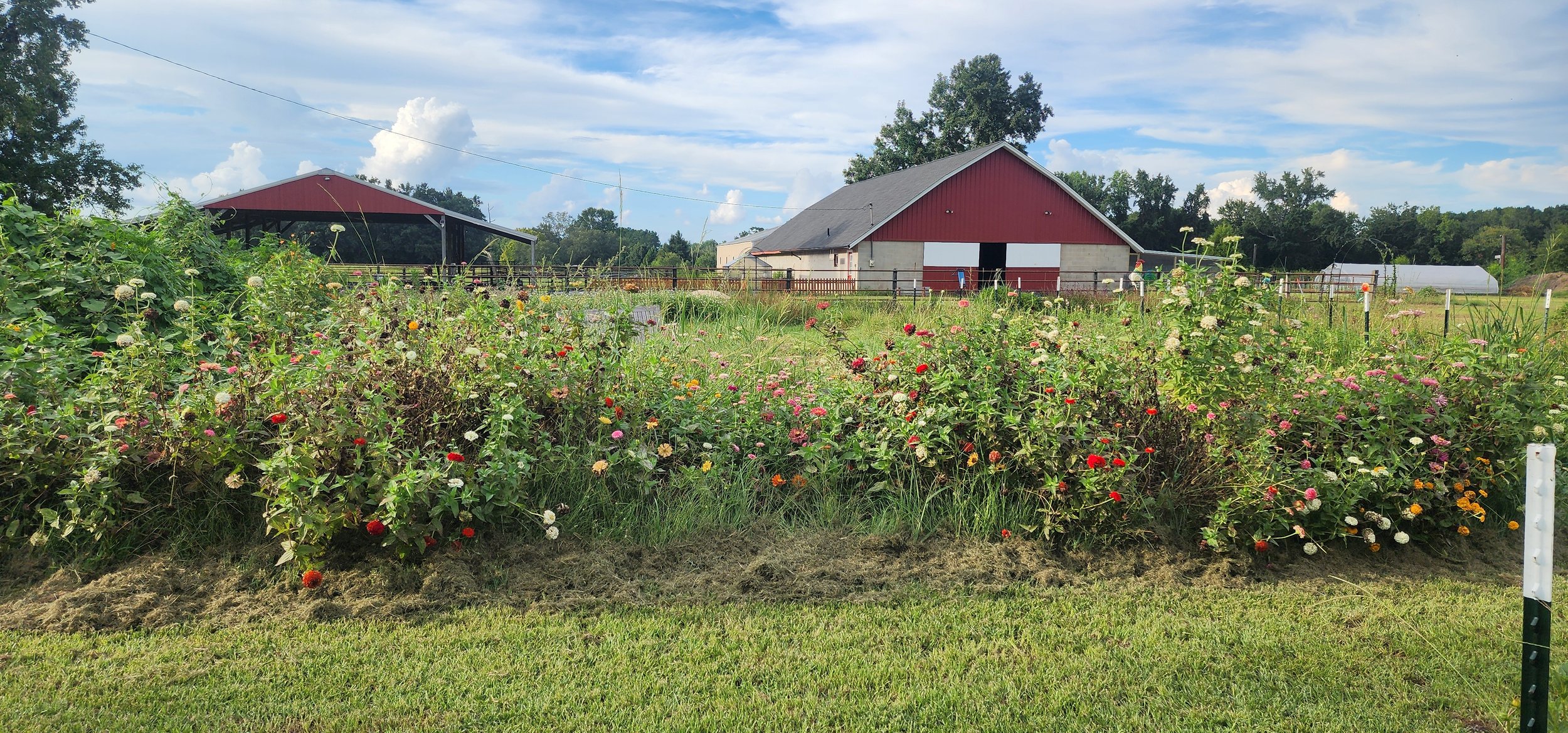
Our zinnias have probably shown it the most. They were planted in March, and earlier this summer they were blooming machines. We could cut them and almost immediately turn around to find more flowers waiting. But by August, the heat had taken its toll. Plants were getting tired, blooms were smaller, and more stems were going to seed.
There comes a point when you have to stop trying to convince a plant that it has another month of summer left in it, and instead, let it go.
Our largest zinnia bed has definitely reached that point.
We're beginning to cut things back and make decisions about what stays, what goes, and what gets replaced with something for fall or if the bed is ready to be prepped for winter cover crops. It is a strange feeling after spending so many months nurturing these plants. I remember when some of them were nothing more than tiny seedlings under grow lights. Then I transplanted them into the field, worried about them, watered them, watched them bloom, and welcomed people here to cut them.
Of course, by the second succession, I learned that broadcasting seeds with some sprinkle action was a much easier method to get seedlings than grow lights.
Now their season is ending.
I think that's one of the lessons I needed to learn during our first full growing season. A flower farm is constantly changing. You cannot become so attached to what bloomed beautifully in June that you refuse to make room for what needs to grow next.
Sometimes you have to say thank you and pull the plant.
I'm still working on the emotional part of that.
Then God Sent the Rain
You know I can’t go a single monthly update without talking about the rain…or lack of rain. For a first season, I think the dry heat and shortage of rain was the hardest part to work through. Although, I will say, the powdery mildew that often happens here in the South didn’t seem to affect many of our plants this year. So I guess….maybe I should be thankful for the dry heat?
In August, we had reached the point where the flowers were truly struggling. The ground was dry, the plants were stressed, and we were doing everything we could to keep things going. I found myself looking at the weather forecast far more often than any reasonable person should and praying for rain.
For anyone who knows me, I have a slightly controlling type of personality. But it’s times like these when I am reminded reminded just how little control I actually have. I can plant the seed. I can prepare the soil. I can drag hoses around and water until I'm exhausted. I can research, plan, fertilize, weed, and do everything I know to do.
But I cannot make it rain.
Only God can. And thankfully, after a long dry spell, He did.
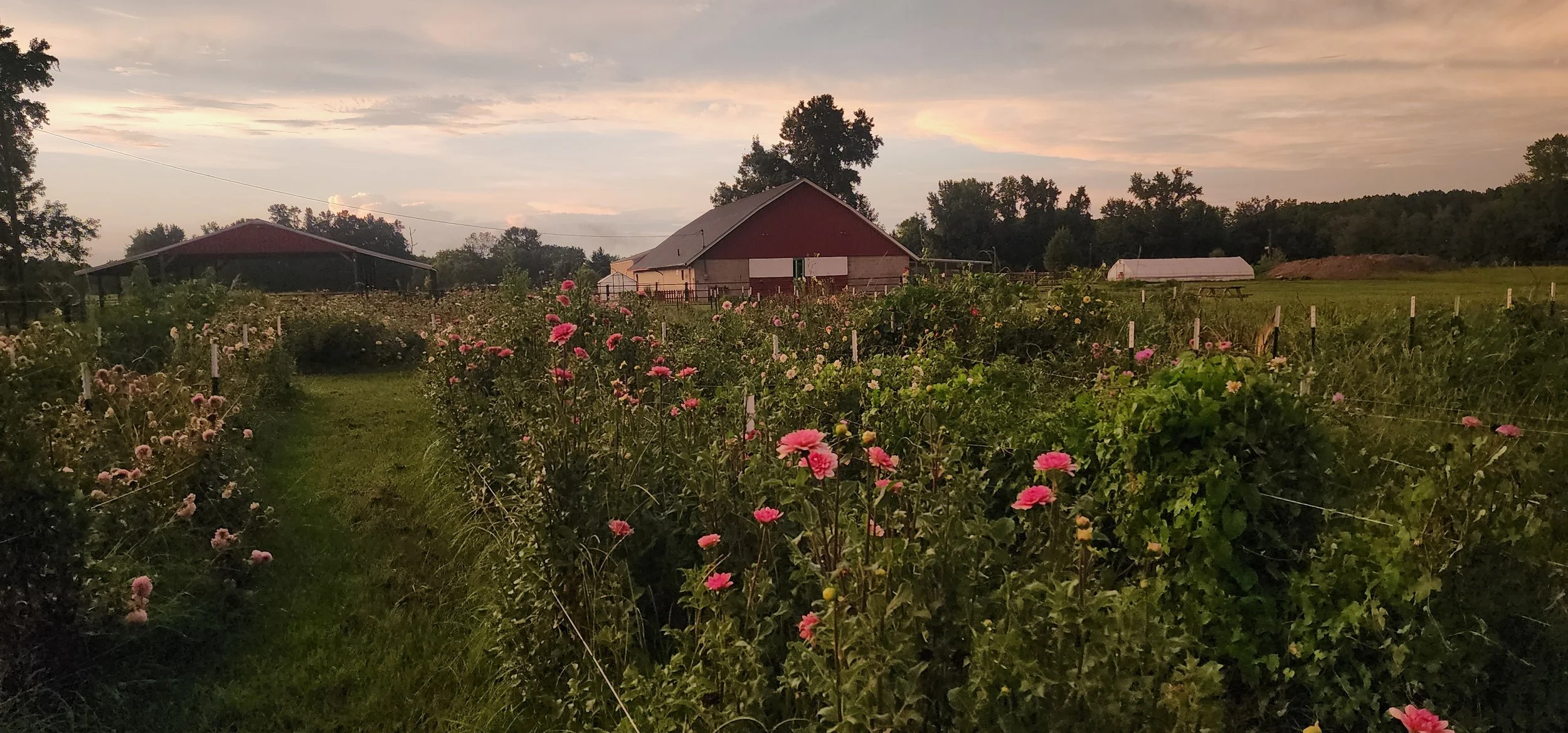
After the rain, I walked through the flower field at sunset, and everything looked so refreshed and beautiful. Water droplets were sitting on petals. The colors looked deeper. The air smelled fresh again. Flowers that had spent days looking exhausted lifted their heads.
I made a video that evening and began it with the words, "Come and take a walk with me. The flowers have something to show you."
And they really did.
There Is Something Sweet About a Second Bloom
The snapdragons also made a sneak showing this month.
We cut them back several weeks ago after their first big flush, and honestly, I wasn't expecting much from them afterward. A second bloom from snapdragons is rarely as impressive as the first.
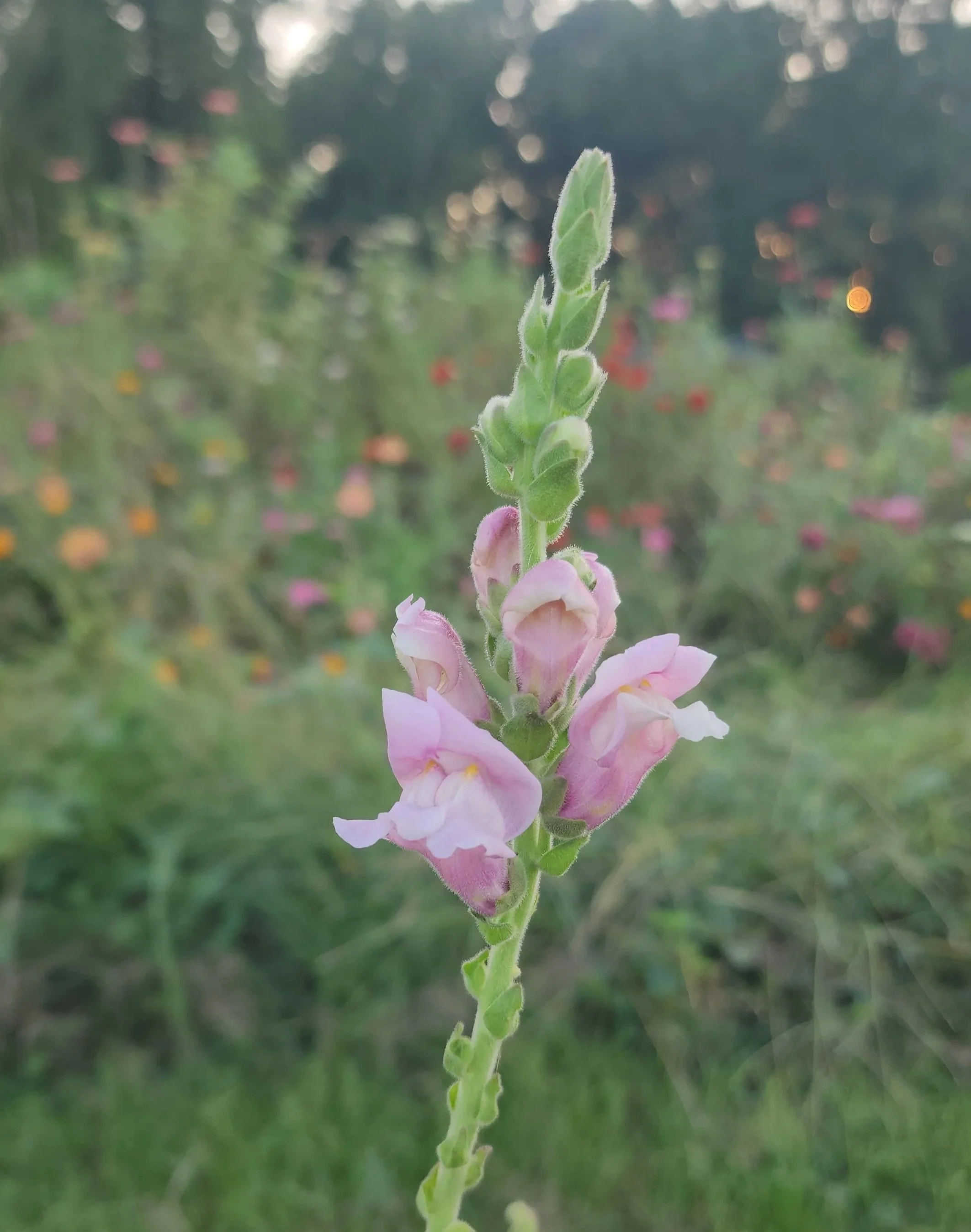
But then they started blooming again.
There aren't as many stems this time. They aren't quite as tall or dramatic. The flowers feel a little more delicate.
And somehow I think I love them even more for it.
There is something sweet about a second bloom.
Maybe it's because you weren't expecting it. Maybe it's because you already thought the best part had passed. Then suddenly the plant reminds you that it wasn't quite finished.
I've caught myself thinking about that more than once while walking through the field.
We spend so much of our lives celebrating beginnings and big first moments. First blooms. First U Picks. First accomplishments. But there is beauty in what comes afterward too.
Sometimes the second bloom is quieter, but that doesn't make it less beautiful.
A Little Taste of Fall
We had a few evenings this month when the temperature dropped just enough to make me think about fall.
Now, don’t worry, I know better.
I’ve lived in South Carolina for years, and I know that summer was not packing its bags and politely leaving August just yet.
Still, that tiny bit of cooler air was enough to make me start craving fall colors and pumpkin spice tea.
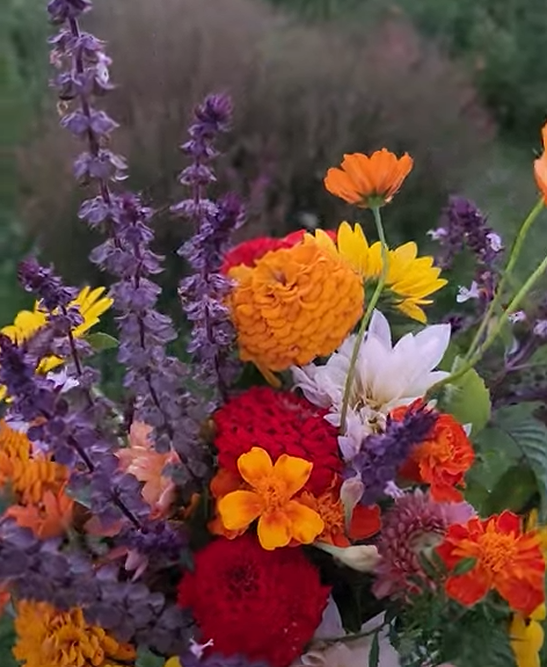
I walked through the field one evening and started picking flowers in all the warm colors that reminded me of fall. Rusts, oranges, deep pinks, yellows, and all those colors that make you start thinking about sweaters even though you know perfectly well you'll be sweating again by noon tomorrow.
The bouquet turned out so beautiful that I decided I wanted to give it away.
I love that we're able to do things like that now.
Flowers have value, of course. This is a farm and a business, and selling what we grow is what allows us to keep growing it. But flowers also have this incredible ability to brighten someone's day for no reason at all.
Sometimes that's reason enough to cut a bouquet.
Growing From the Beginning
August has also been filled with decisions about next year's flowers.
One of the bigger decisions I made was about lisianthus. If you came to one of our u-picks this summer, you likely saw my very small test patch of lisi’s to see if this was a flower I wanted to grow. And you know, I was blown away. In the scorching hot August, the lisi’s are still churning out blooms! It’s an amazing flower. But back to my point.
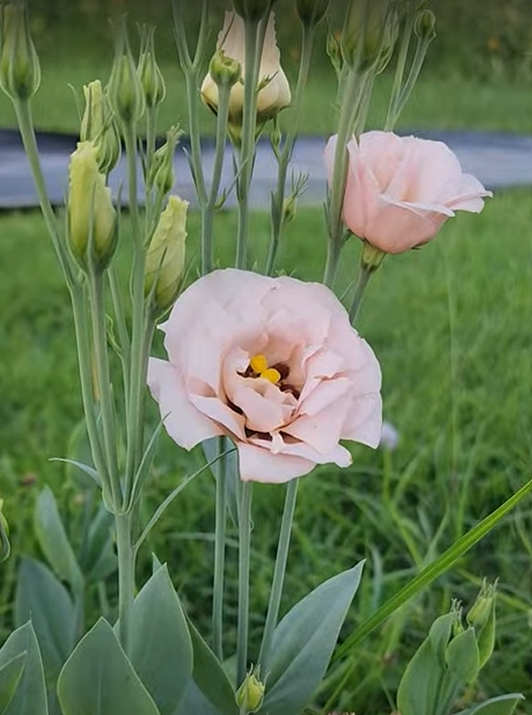
I had originally planned to order plugs for next season. Lisianthus are notoriously slow to grow from seed (ours took 7 months!), and buying plugs would certainly make life easier.
It would also make life considerably more expensive. But cost wasn't really the thing that changed my mind.
I realized I actually want to grow them myself.
I grew lisianthus from seed this year, so I already know I can do it. And the more I thought about ordering trays of established plants, the more I realized how much I would miss the process.
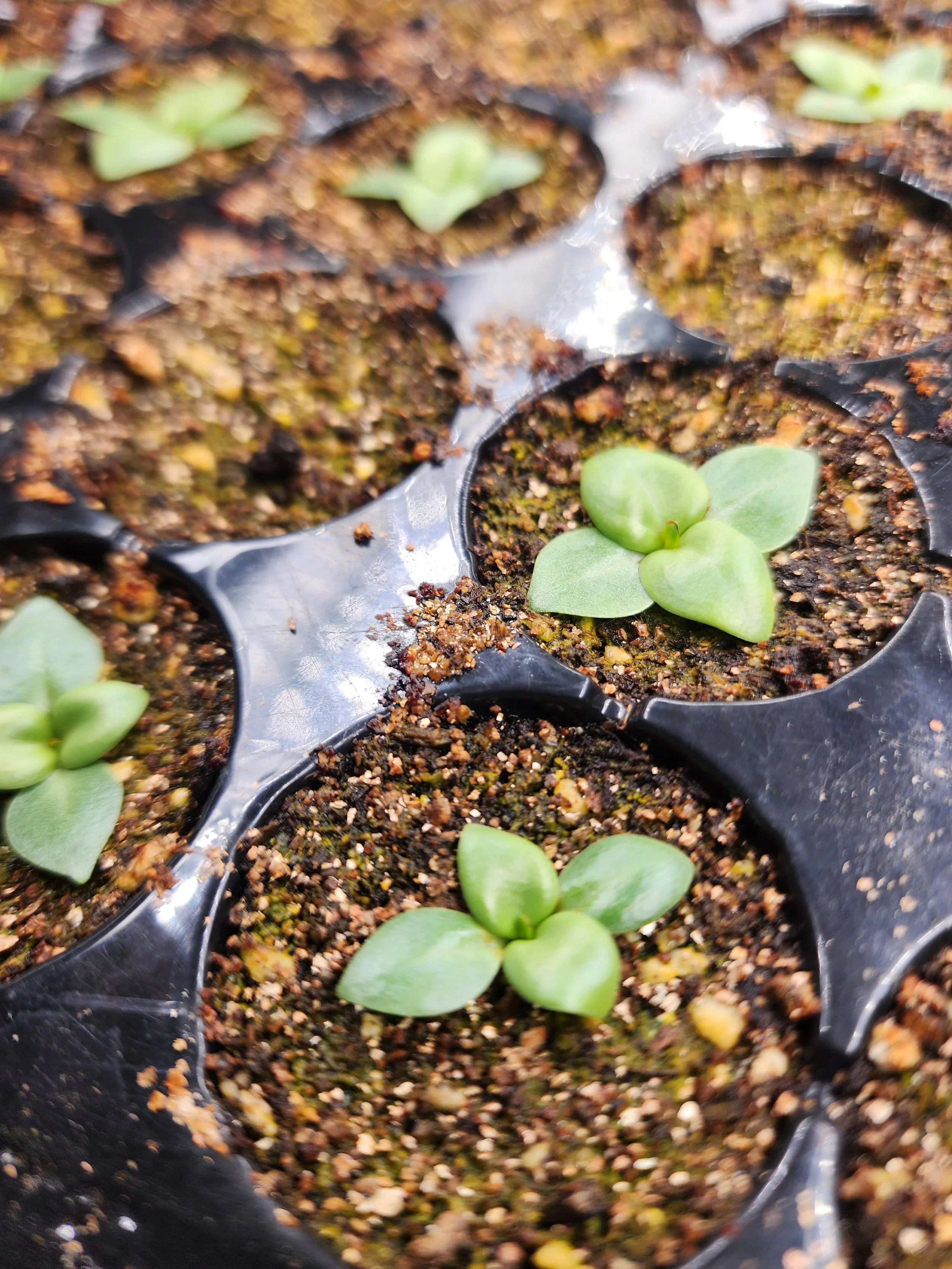
I love growing flowers from seed.
Most of the flowers people walked through our fields and picked this summer started that way. I poured tiny seeds into my hand, tucked them into soil, kept them watered, watched for the first little green leaves, transplanted them, and eventually watched them become flowers.
There is something incredibly satisfying about knowing a field full of flowers began with something you could have held in the palm of your hand.
So I've decided that next season I'm not planning to order lisianthus plugs and instead we are just going to grow from seed just like we did for the test patch.
That probably means an unreasonable number of seed trays, a lot of grow lights, and several months when every available surface becomes questionable real estate.
I've done it before. At least this time, I may not be doing it alone. We've actually had people offer to volunteer at the farm. I don't think I can fully explain how much that means to me. This entire year we've been building something for our community, and now members of that community are beginning to ask if they can help us build it.
Maybe next year's flower field won't simply be something we grew for our community.
Maybe it will be something our community helped us grow.
I absolutely love that thought.
Planning Spring in the Fall
While most people are beginning to think about pumpkins and mums, I'm already thinking about spring.
Flower farming has completely ruined my ability to live in the current season.
This fall we'll begin sowing many of the flowers we hope will fill the fields early next year. Lisianthus will be one of the big projects, along with campanula, clarkia, snapdragons, and plenty of other cool-season flowers.
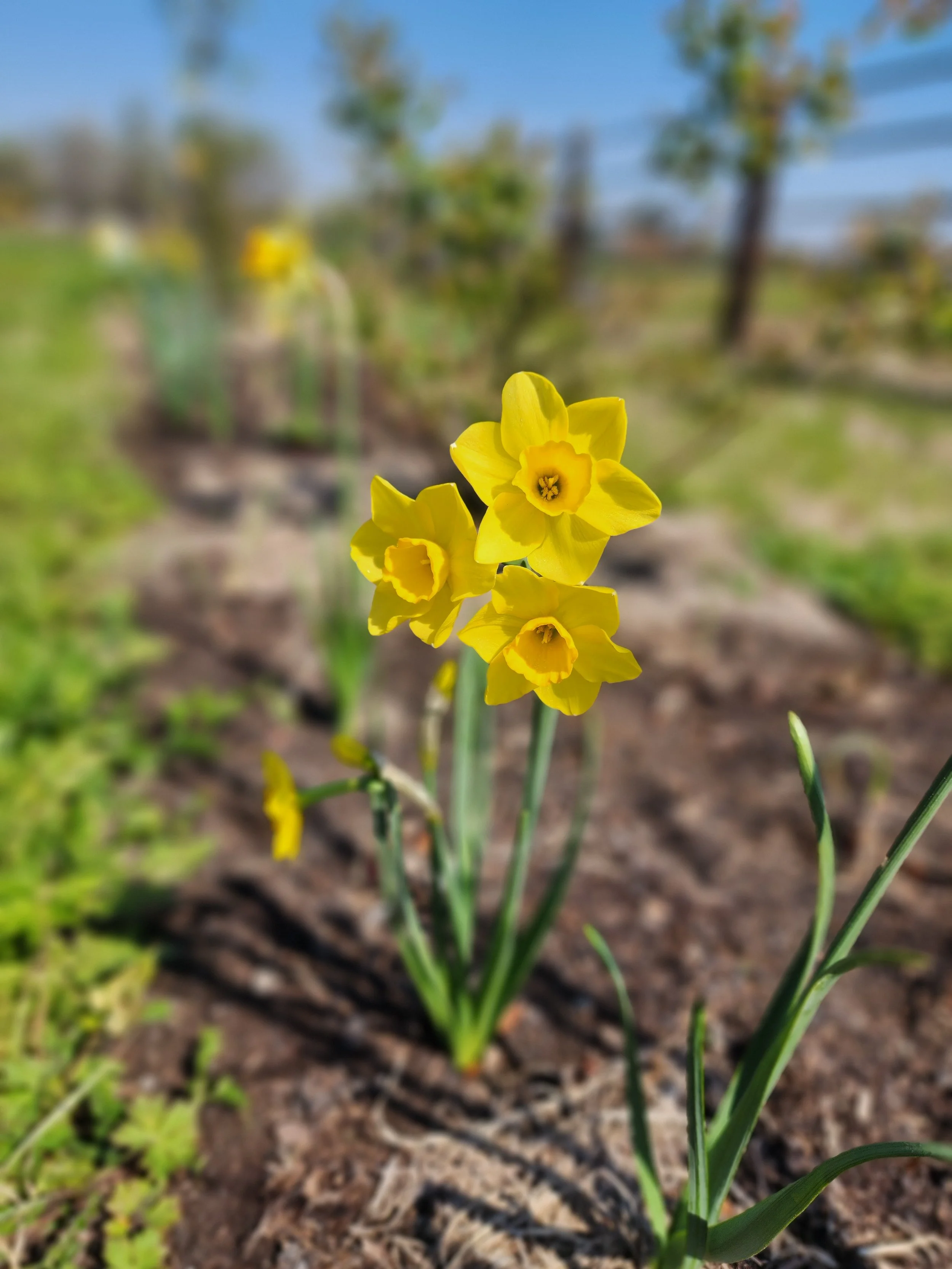
Then there are the bulbs and corms.
We're planning to plant almost 1,000 daffodils, along with another large crop of ranunculus.
I am particularly excited about the ranunculus after everything they put me through this year.
If you remember our winter updates, I spent an embarrassing amount of time worrying about those plants. They survived the cold, surprised me in March, and then continued giving us gorgeous flowers much longer into spring than I expected.
Naturally, after all that worrying, my conclusion was that we needed more of them.
This is apparently how flower farming works.
I'm equally excited about the daffodils because those are an investment in the future of the farm. Our goal is to continue expanding them until we eventually have enough established beds to hold our very own daffodil festival each Spring.
There is something beautiful about planting all of this in fall.
Starting in September, we'll tuck tiny seeds, bulbs, and corms into the soil as everything around them begins slowing down. For months there won't be much to see.
But underneath the soil, the next season will already have begun.
Then one chilly morning next spring, those first green shoots will appear.
And we'll remember exactly when the story started.
Growing More Than Flowers
Another thing that has taken up quite a bit of my attention this month is herbs.
Actually, herbs may be becoming a slight obsession.
The more I learn about plants, the more fascinated I become by how much they can offer beyond simply looking beautiful or making a pasta dish tastier.
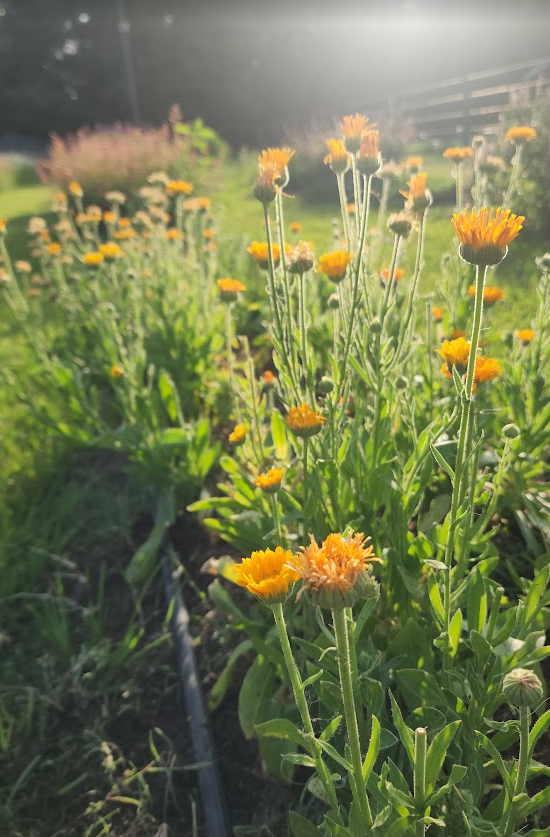
We've been experimenting with yarrow, calendula oil infusions, herbal hand sanitizers, lotions, teas, and other botanical products. I've also started learning more about perfume making and how herbs from our farm can be combined with essential oils and other ingredients to create both liquid and solid perfumes.
There is a lot to learn, and I'm enjoying every bit of it.
Natural and herbal living is important to our family. That doesn't mean we reject modern medicine or believe every problem can be solved with a plant. I am very thankful modern medicine exists.
But I also don't want our first instinct for every little discomfort to always be reaching into a medicine cabinet.
I want to know what grows around me.
I want to understand how plants have traditionally been used and how we can safely incorporate some of that knowledge into our everyday lives. I want to learn how to make things with ingredients I recognize and understand.
Most importantly, I want to appreciate what God has already provided.
The more I study plants like yarrow, calendula, echinacea, lavender, chamomile, mint, lemon balm, and so many others, the more amazed I become by creation.
That is also shaping the herb garden we're planning for the farm.
I don't want a few rows of herbs.
I want a place people can experience.
There will be culinary herbs, medicinal herbs, herbs for Jamie's handcrafted teas, plants for pollinators, and plenty of things that simply smell wonderful when you brush against them.
Eventually I hope we can use that space for workshops and education too. I want people to leave the farm knowing a little more about the plants growing around them than they did when they arrived.
Flowers may have been where Hickman Hollow Farms began.
But plants have so many more stories to tell.
The Duck Pond Starts Becoming More Than a Pond
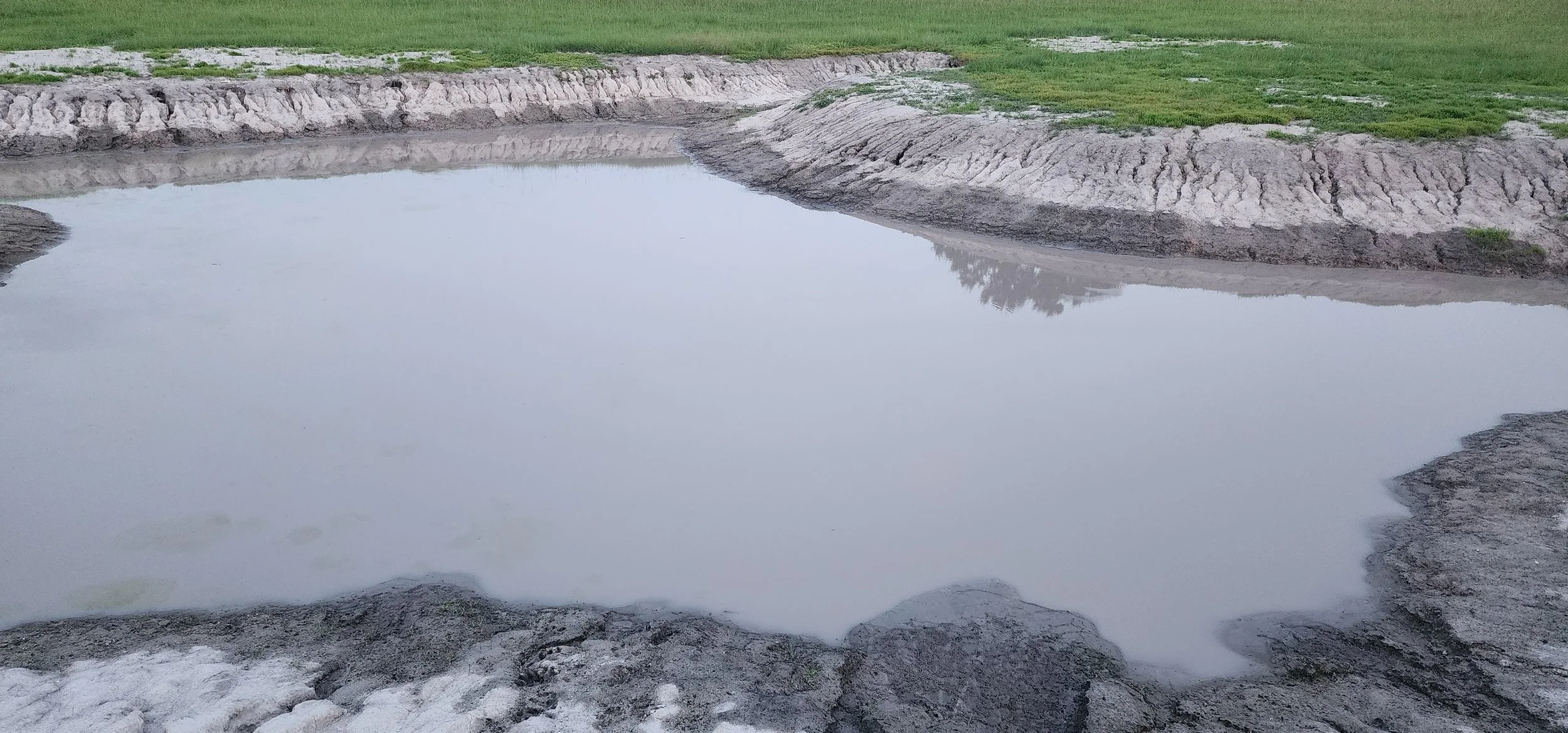
Last month we shared one of our biggest new projects when we had the duck pond dug.
This month we've started figuring out what comes next.
As usual, one project has turned into approximately seventeen other projects.
We've been researching ways to keep the water from draining, and we know the immediate next step is either clay or a vinyl liner. We’ve been thinking about aeration and circulation, talking about landscaping around the pond, and figuring out what kind of housing our future ducks will need.
Then, of course, we had to start talking about ducks.
Which breeds should we get?
Will they stay on the pond?
Will they fly away?
Do we need one large duck house or several smaller ones?
How much protection will they need at night?
These are the conversations happening around our dinner table now.
The pond itself is around 30,000 square feet and roughly five feet deep in the center, so our future ducks are certainly not going to be short on swimming space.
I already find myself looking across the water (even as low as it is) and imagining them out there.
The goal is not simply to put ducks on a pond, though. We want the entire area to eventually feel like another beautiful part of the farm. I picture plants around the shoreline, places to sit, wildlife moving through, and families stopping for a while just to watch the water.
It's still very much a work in progress.
But most of my favorite things around here started that way.
The Chicken Coop Becomes a Home
July was all about getting our chicken coop built because I may have brought home twenty five baby chicks in June without actually having a finished chicken coop waiting for them.
Details.
Thankfully, Jamie came through, as he usually does.
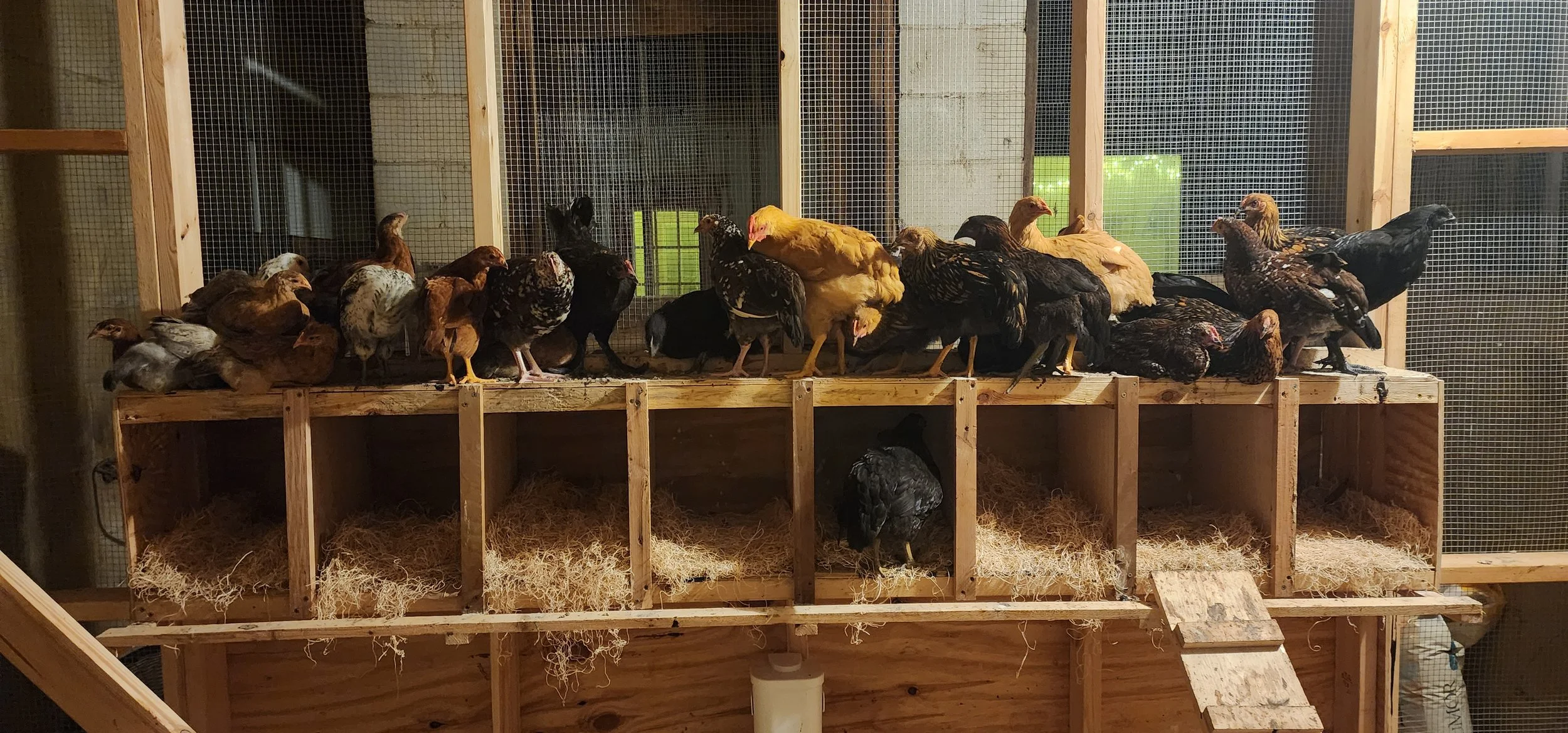
We converted one of the eighteen stalls in our horse barn into their coop, and he did an incredible job making it safe and functional. He built a new door, added an automatic chicken door, created nesting boxes we can access from the barn aisle, and generally made my spontaneous chicken purchase look far more planned than it actually was.
I built the ramps.
Please hold your applause.
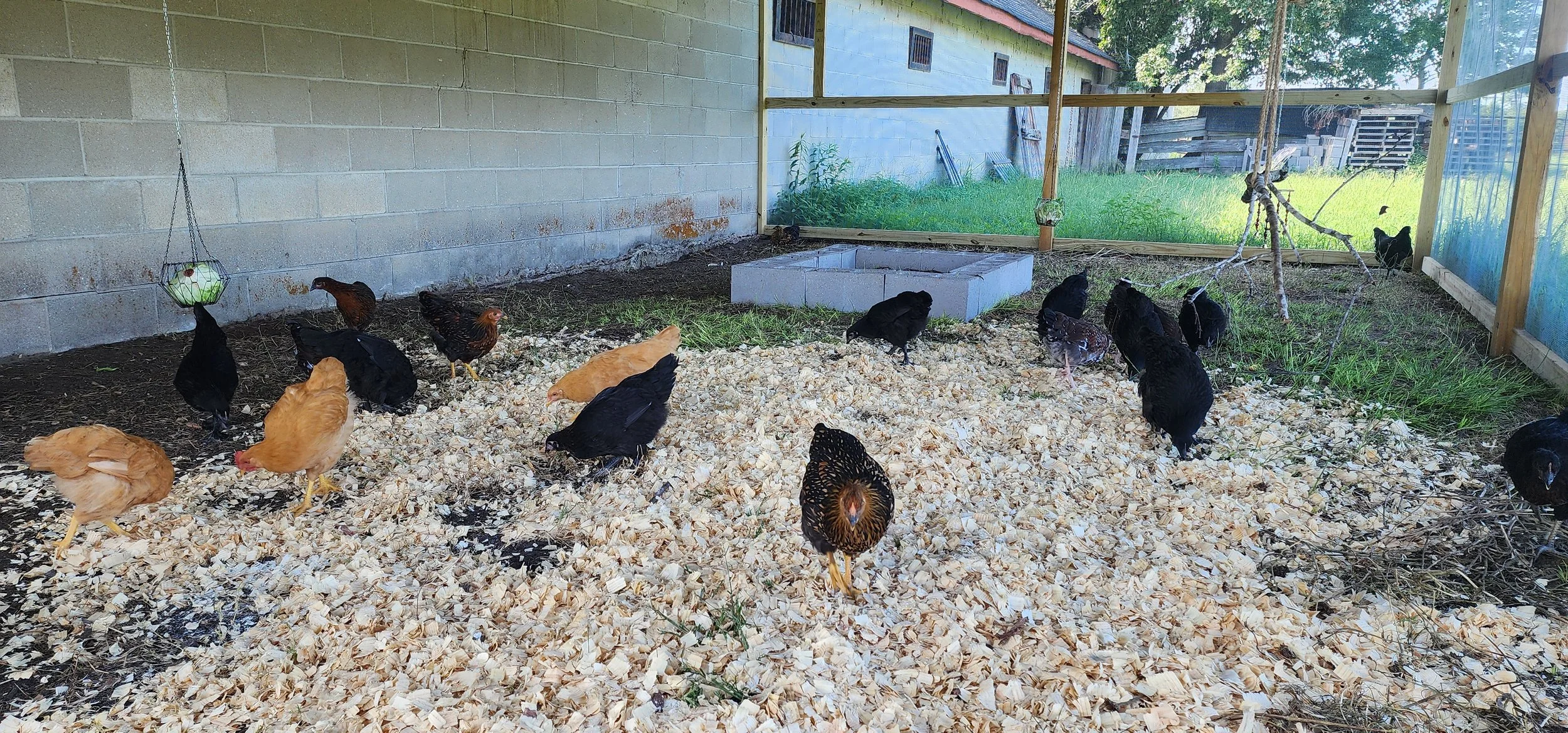
This month I've been able to focus on all the little things that turn a chicken coop into a home.
We've been adding perches, dust baths, automatic watering, enrichment activities, and all the other little details that make the space more interesting for the chickens and more enjoyable for visitors.
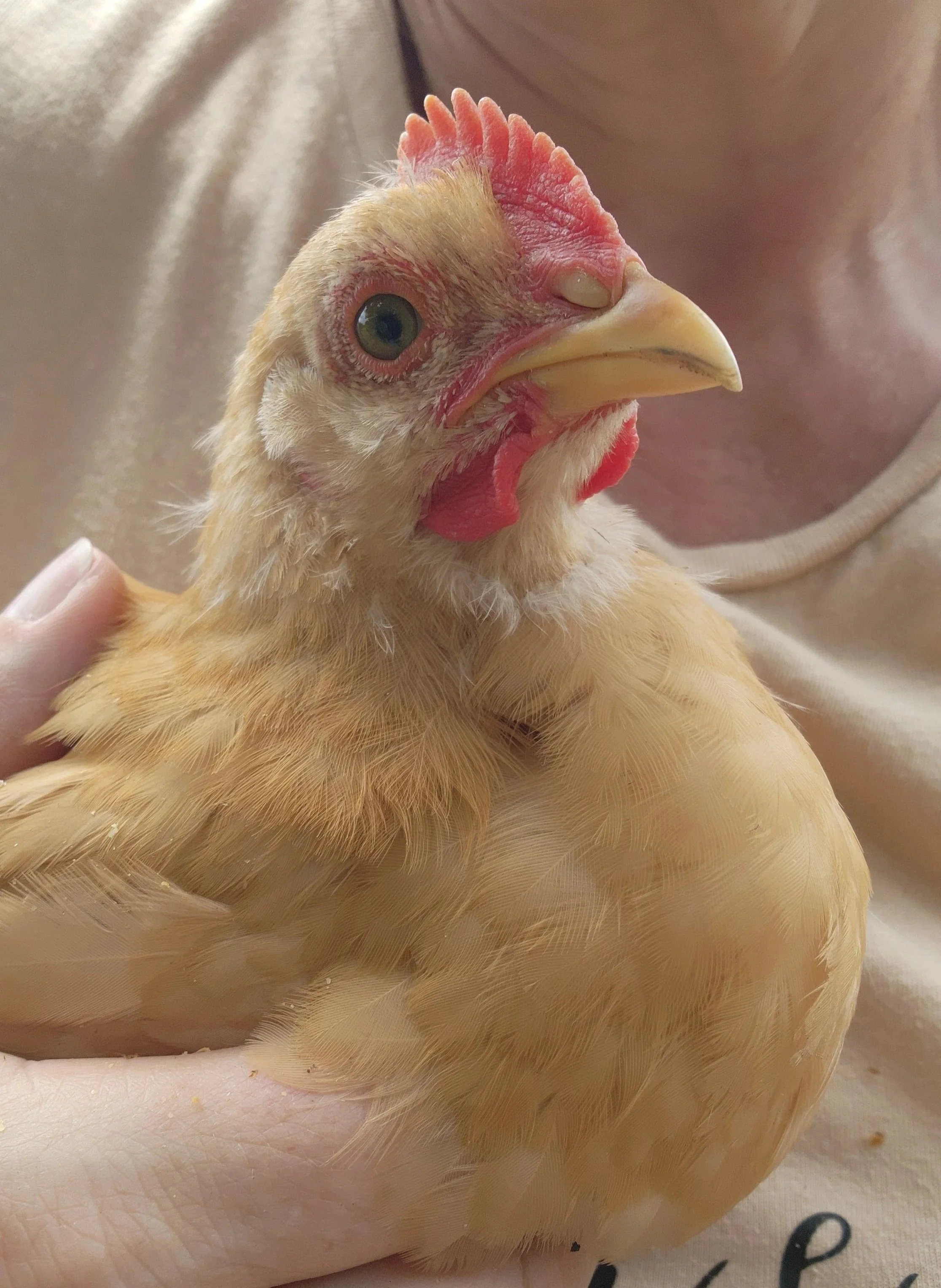
I've even been thinking about subtle lighting outside the run for evenings when people are visiting the farm, while still making sure the chickens themselves have the darkness they need to sleep naturally.
Do the chickens care that I'm decorating their house?
Absolutely not.
They would probably trade every decorative touch for an extra handful of treats.
But I care.
As more animals become part of Hickman Hollow Farms, I want their spaces to be functional and safe first, but I also want them to feel like they belong here.
And if the chicken coop ends up looking a little adorable along the way, I'm certainly not going to apologize for that.
Something Is Stirring in the Hollow
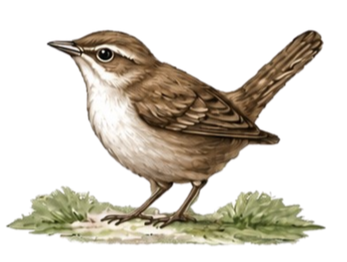
I mentioned stories about seed starting a few paragraphs ago, but I have another story to share. There is one other project quietly taking shape behind the scenes.
If you've noticed that I've started referring to Hickman Hollow Farms as simply "The Hollow" from time to time, you're paying attention.
One thing you may not know about me is how much I love to write and create stories. I've been thinking a lot about how that part of me might become woven into the farm itself.
Not in some loud or artificial way. Something quieter and feels like it belongs here.
Over the coming months, you may start noticing little changes in the way we tell stories from the farm. You may notice a curious phrase, a familiar little wren, or something tucked into a corner that wasn't there before.
I won't explain too much yet.
Where would be the fun in that?
I'll just say this.
The Hollow is beginning to wake up.
And you'll want to pay attention.
One Last Monthly Update
Before I close out August, I have one more change to share.
This will be the last monthly update here on the Hickman Hollow blog.
I've loved writing these posts each month. In many ways, they have become a journal of our first year of building Hickman Hollow Farms. We've documented tiny seedlings taking over my kitchen, moving into the farmhouse in the pouring rain, our first peonies and ranunculus, planting thousands of gladiolus, opening the gates for our very first U Pick, bringing home far too many chickens before their coop was ready, digging a duck pond, surviving the summer heat, and so many little moments in between.
I'm incredibly thankful that I've written it all down.
But somewhere along the way, I realized that a month is actually a very long time around here.
By the time I sit down at the end of each month, I'm digging through photos and trying to remember something that happened three weeks ago while approximately forty seven other things have happened since.
So rather than continuing these monthly updates, I am replacing them with something I'm really excited about.
The Gardener's Letter.
The Gardener's Letter will arrive every Thursday and will become the new way I share what's happening around Hickman Hollow Farms. Instead of waiting until the end of the month, I'll be able to tell you about things while they're actually happening.
What's blooming. What we're planting. What we're learning. What's happening with the animals. And probably the occasional story about something Jamie built because I came up with another idea and casually mentioned, "You know what would be really nice..."
The Gardener's Letter will also give me room to share more than farm updates. I want it to be something worth opening each Thursday, whether you visited the farm that week or live hundreds of miles away. There will be gardening, flowers, seasonal living, recipes and herbal projects, stories from the farm, things I'm learning, and little pieces of life here in the Hollow. It will of course, also mingle in some of the Hollow magic we are introducing.
So this isn't really the end of our farm updates.
We're just changing the way I tell them. And I think I'm going to like this even better and I hope you will too! To read more about it or to sign up be sure to read over this page about the Gardener’s Letter.
Looking Toward September
August has reminded me that endings and beginnings often happen at exactly the same time. But maybe that’s what this month has really been about. Learning not to fight the changing season.
There is a time when the field bursts into bloom and a time when those flowers begin to fade. There is a time to harvest and a time to plant something you won't see for months.
I think God designed creation that way for a reason.
I'm excited to sow lisianthus seeds and wonder what they'll look like months from now. I'm excited to put nearly a thousand daffodils into the ground and imagine families walking through them next spring. I'm excited for another season of ranunculus, for cooler mornings, for herbs, for ducks, for gardens that still exist mostly in my imagination, and for all the little pieces of The Hollow that are beginning to find their way into the real world.
This first growing season has taught me that a farm is never finished.
It changes.
It rests.
It surprises you.
Sometimes it makes you worry and sometimes it makes you laugh.
And every once in a while, it gives you an evening after the rain when the flowers sparkle and you remember exactly why you started doing all of this in the first place.
So here's to September.
Whatever grows next, we're ready for it.
