What Are We Growing?
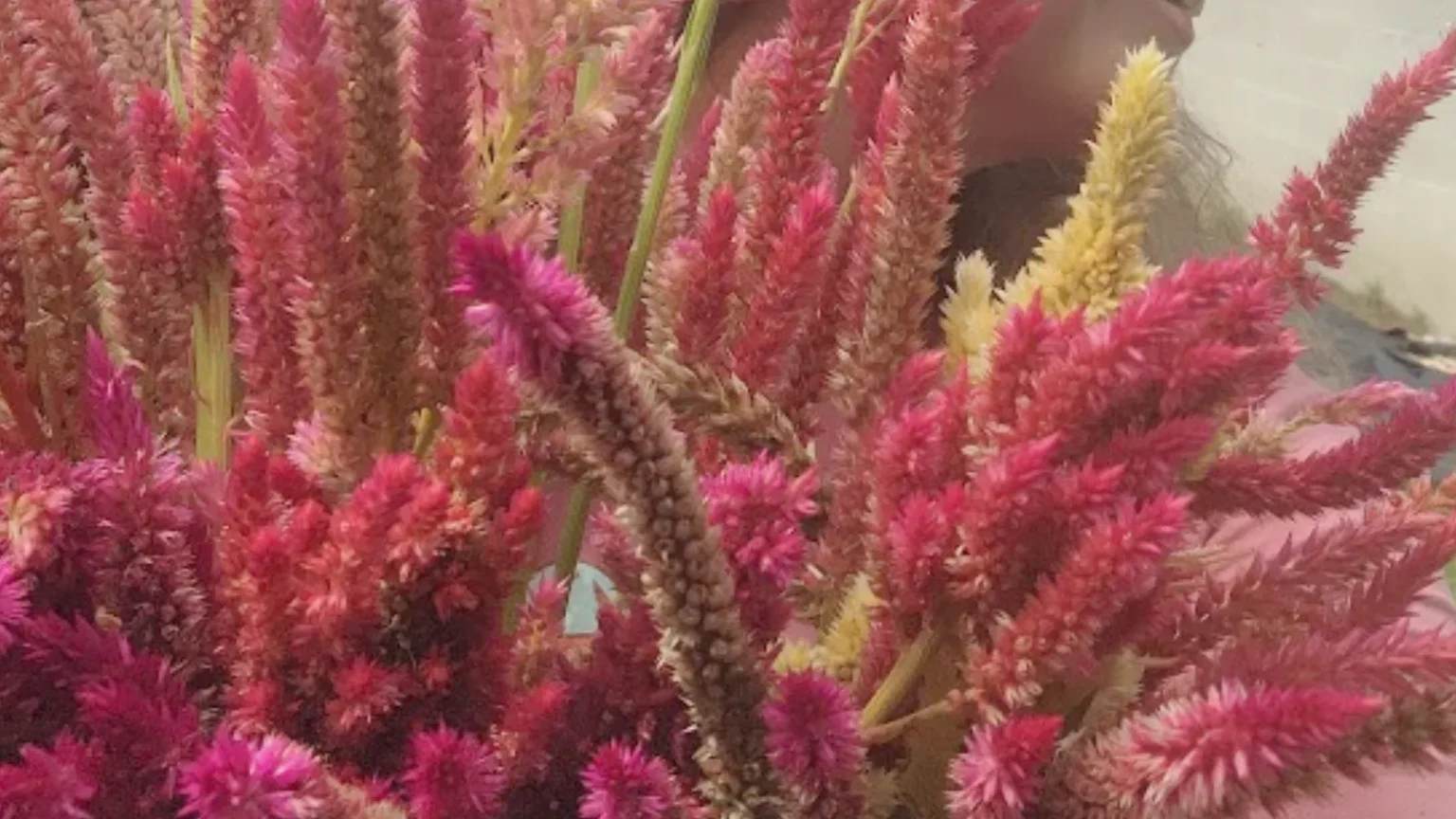
Celosia comes in two main shapes: feathery plumes and crested types that look like coral or velvet. It loves our hot, humid summers, with colors from hot pink and gold to deep burgundy. The young leaves of some types are even cooked as a leafy green in parts of Africa and Asia, where it’s called Lagos spinach.
Our Varieties
- Flamingo Feather: feathery plumes in a soft pink hue
- Sylphid: soft lime-green plumes
- Chief Mix: classic crested cockscomb on tall stems
- Shimmer: a soft pastel blend with airy plumes
- Pampas Plume: Soft, feathery plumes with dramatic color varieties.
When Will It Bloom at the Hollow?
Celosia needs warm soil, so it goes into the field in early April, after our last frost at the end of March. The first plumes and crests color up in late June, and the plants keep producing through the heat of summer and into fall, until our first frost in mid-November.
How to Know When It’s Ready
Cut celosia once the plume or crest is fully formed and colorful, but before it starts to set seed and look fuzzy at the base.
- Plume or crest full size and colorful
- No seeds forming at the base
- Pick in the morning
How to Cut It
Cut the main stem long, just above a pair of leaves, to encourage side shoots. Put stems straight into water.
Making It Last in the Vase
Strip every leaf, because celosia leaves wilt quickly and spoil the water. Change the water every few days and expect one to two weeks in the vase, one of the longest of any summer flower.
Plumes add texture to summer bouquets, and a little crested celosia in a bud vase is always a talking point.
Drying for Preservation
Celosia is one of the best flowers for drying. It keeps its color and shape for a year or more.
- Hang to dry: strip the leaves, bundle small bunches with a rubber band, and hang them upside down somewhere dark, dry and airy for about two weeks.
- Use: dried plumes and crests are lovely in fall wreaths, everlasting bouquets and holiday arrangements.