What Are We Growing?
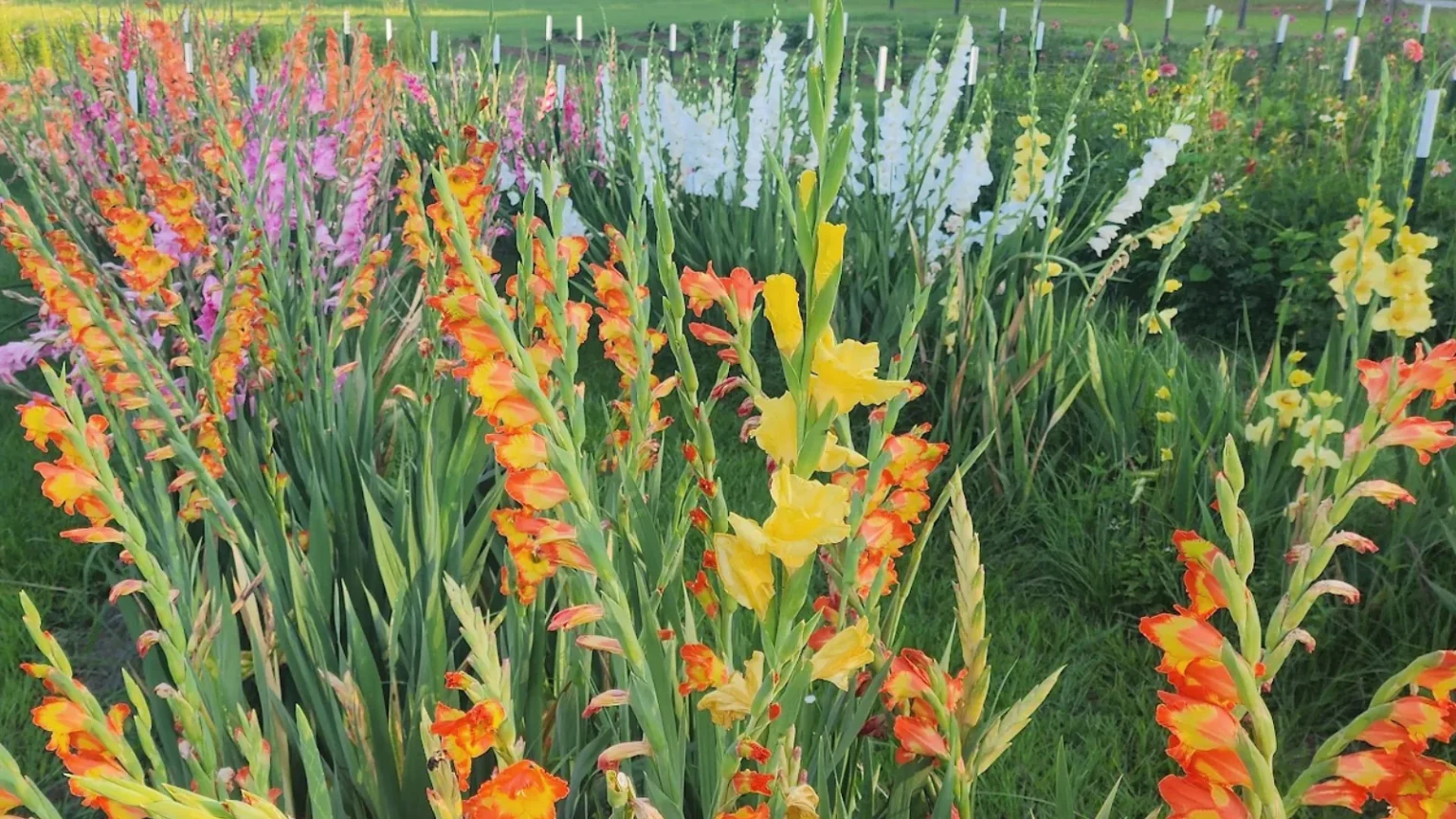
Gladiolus send up tall spikes lined with ruffled blooms that open from the bottom up. They grow from corms, and a few planted every couple of weeks give us a steady supply of spikes through summer. They’re grown purely for beauty: the corms are toxic if eaten, so keep them away from children and pets.
Our Varieties
We grow over 30 varieties of gladiolus and are a favorite of our guests. Different varieties will bloom at different times of the year due to succession planting. Here are just a few of the varieties we grow.
- White Prosperity: pure white with a soft blush throat
- Princess Margaret Rose: sunset yellow edged in red
- Green Star: unusual lime-green blooms
- Black Star: deep velvety burgundy
- Olympic Flame: A stunning orange stem
- Bananarama: One of our favorites in a gorgeous yellow
- Sugar Babe: Beautiful spikes in a light pink, almost coral color
When Will It Bloom at the Hollow?
We start planting corms in early April, after our last frost at the end of March, and keep planting a new batch every two weeks into early summer. Each batch blooms about 70 to 90 days after planting, so the first spikes open in late June and new ones keep coming through July, August and into September.
How to Know When It’s Ready
Cut when the lowest one to three flowers on the spike are showing color. The rest of the buds will open in the vase.
- Bottom one to three florets showing color
- Upper buds still tight
- Cut in the morning
How to Cut It
Cut the spike low, but leave at least four leaves on the plant so the corm can feed itself for next year. Stand the stems upright in a tall bucket of water.
Making It Last in the Vase
Keep gladiolus standing upright, even in storage, because the tips curve upward if they lie flat. Snap off the faded lower blooms as you go, and pinch out the very top bud to help the rest open. Change the water every couple of days. They last a week or more.
A few spikes in a tall pitcher make an instant, old-fashioned display, or cut the stems short and float single florets in small jars.
Drying for Preservation
Gladiolus aren’t a good flower for drying whole. The spikes are long and the florets are thin, so they shrivel and drop when hung.