What Are We Growing?
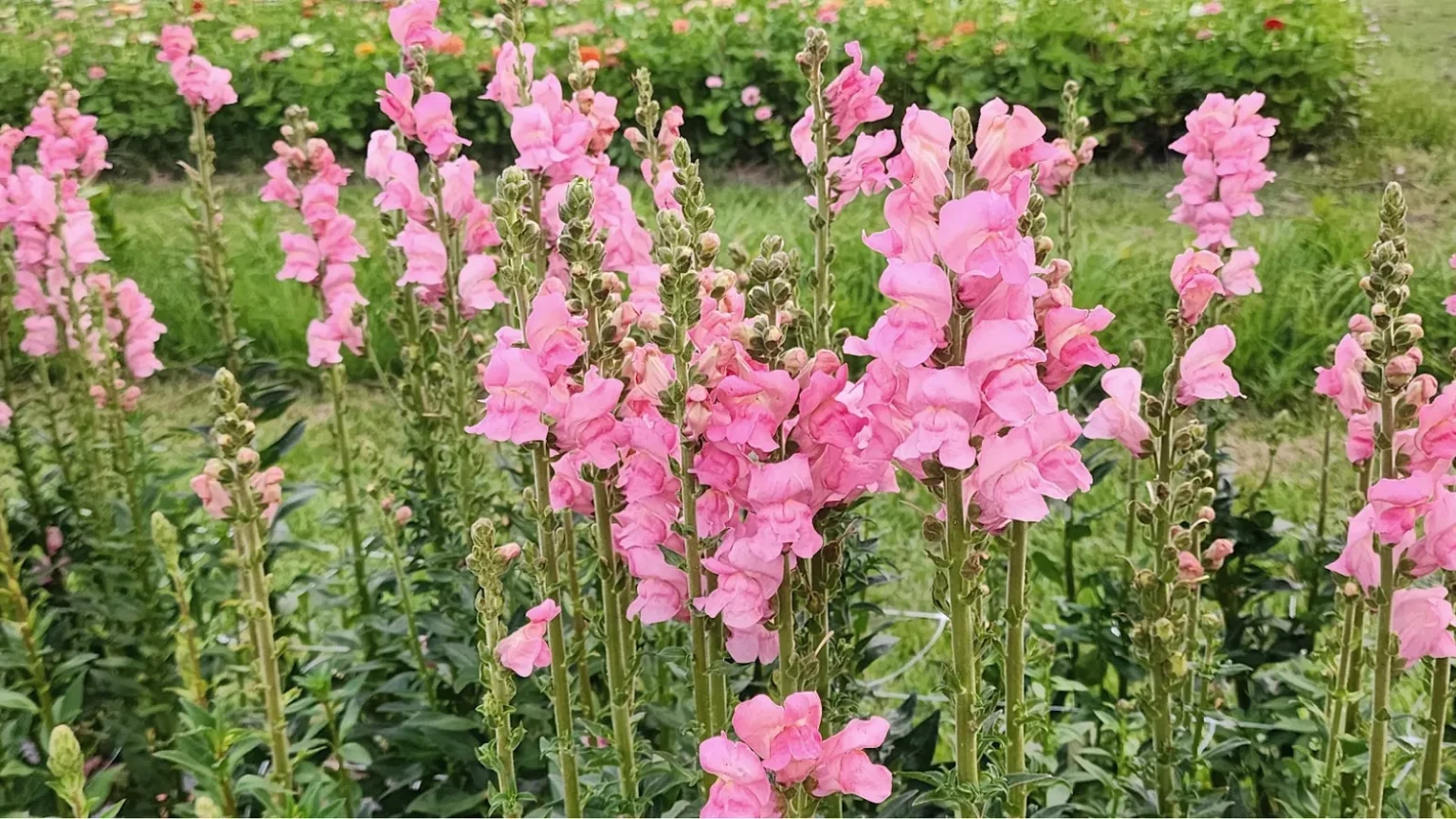
Snapdragons send up tall spikes of little “dragon mouths” that open from the bottom up. They love cool weather, which makes them one of our spring flowers. They’re a favorite of bumblebees, and the flowers are edible, with a mild, slightly bitter taste.
Our Varieties
- Rocket: tall, heat-tolerant spikes in many colors
- Monaco: long, strong stems, a cut-flower favorite
- Avignon II series: strong stems, very productive
- Madame Butterfly: fully double, azalea-like blooms
When Will It Bloom at the Hollow?
Snapdragons are tough enough for our winters. Plants set out in the fall grow slowly through the cold and bloom in April and May, and plants set out in late winter bloom a little later. Plants set out in late summer can bloom again in the fall, until our first frost in mid-November.
How to Know When It’s Ready
Cut when the bottom third of the flowers on the spike are open. The rest will open in the vase.
- Lower third of the spike open
- Upper buds showing color
- Cut in the cool of the morning
How to Cut It
Cut the main spike low, just above a set of leaves, to encourage side shoots for a second round of blooms. Stand the stems upright in water.
Making It Last in the Vase
Keep snapdragons upright, because the tips curve upward if they lie flat. Snap off faded lower flowers and change the water every couple of days. Keep them away from ripening fruit, which makes the florets drop. They last about a week.
Snapdragons add height to any jar, and kids love gently squeezing the blooms to make the “dragon” talk.
Drying for Preservation
Snapdragons aren’t a good flower for drying whole. The florets shrivel and fall when the spikes are hung.
- Pressing: single florets press nicely for cards.