What Are We Growing?
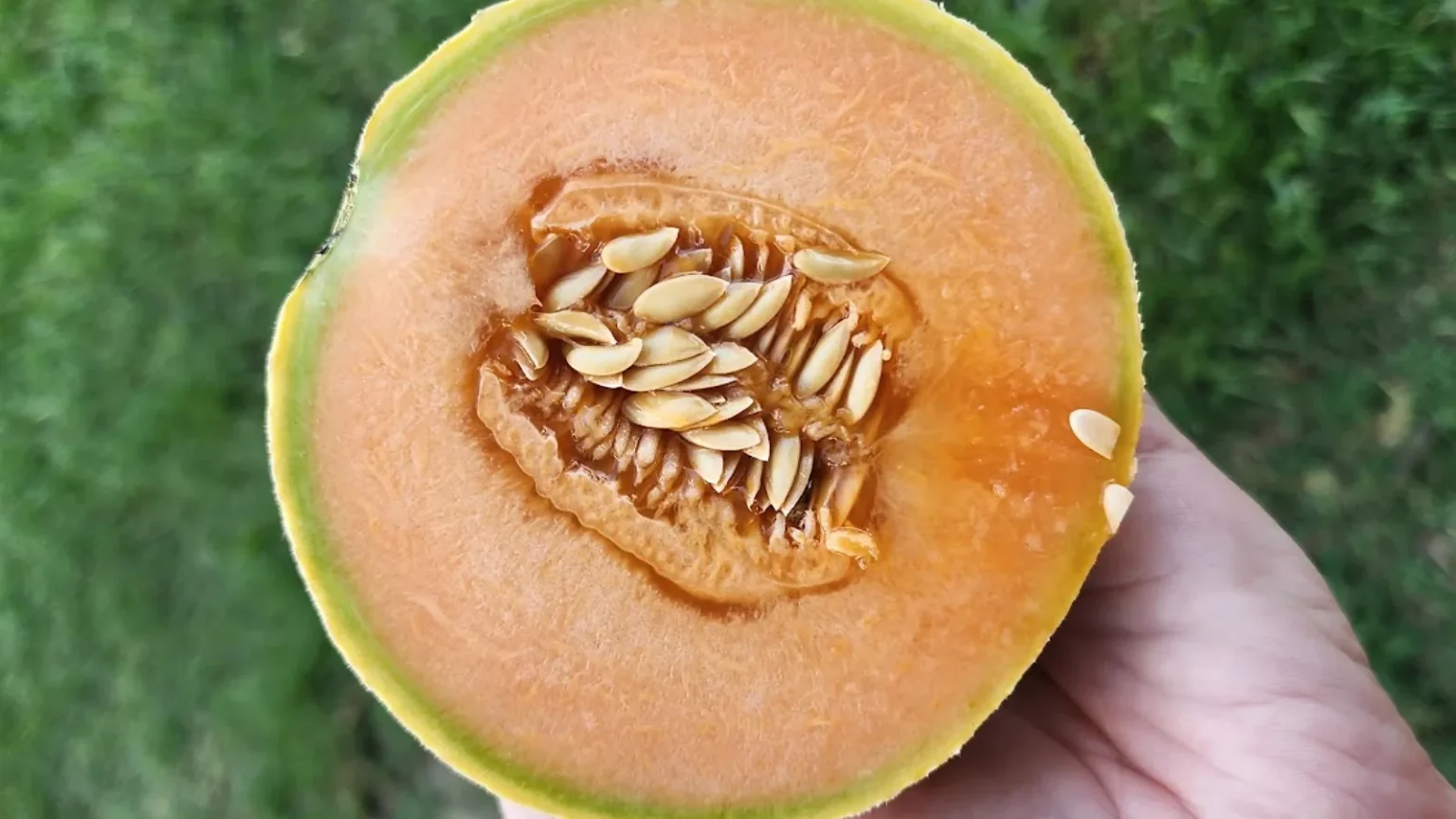
Cantaloupes have netted skin and sweet orange flesh, and a field-ripened one tastes nothing like the store...trust us on this. Cantaloupe is an excellent source of vitamin A (from beta-carotene) and vitamin C, and all that juice makes it wonderfully hydrating.
Our Varieties
- Athena: firm, reliable melon grown across the Southeast
- Sugar Cube: small, personal-size melon with an intense sweet flavor
When Is It Ready at the Hollow?
Melons need warm soil, so we plant them in early to mid-April, after our last frost at the end of March. They take about 80 to 90 days, so the first ones ripen in late June and the harvest runs through July, usually a little ahead of our watermelons.
How to Harvest
A ripe cantaloupe “slips” from the vine: it separates with just a gentle push at the stem.
- Stem separates easily (full slip)
- Netting raised, and the skin underneath tan or golden, not green
- Sweet, musky smell at the blossom end
Press gently on the stem with your thumb. A ripe melon comes away on its own, leaving a clean, round scar. If you have to tug, give it another day or two.
Storing and Preserving
Leave a whole melon on the counter for a day or two to soften, then refrigerate it and eat it within a few days. Scrub the netted rind with a brush under running water before cutting, so nothing on the outside is carried into the fruit.
- Cut melon: keeps about three days in the refrigerator, covered.
- Freeze: freeze cubes on a tray, then bag them for smoothies.
Recipes & Ideas
Wrap slices in prosciutto, add it to a summer fruit salad, blend it into a chilled soup, or simply eat it cold with a spoon.