What Are We Growing?
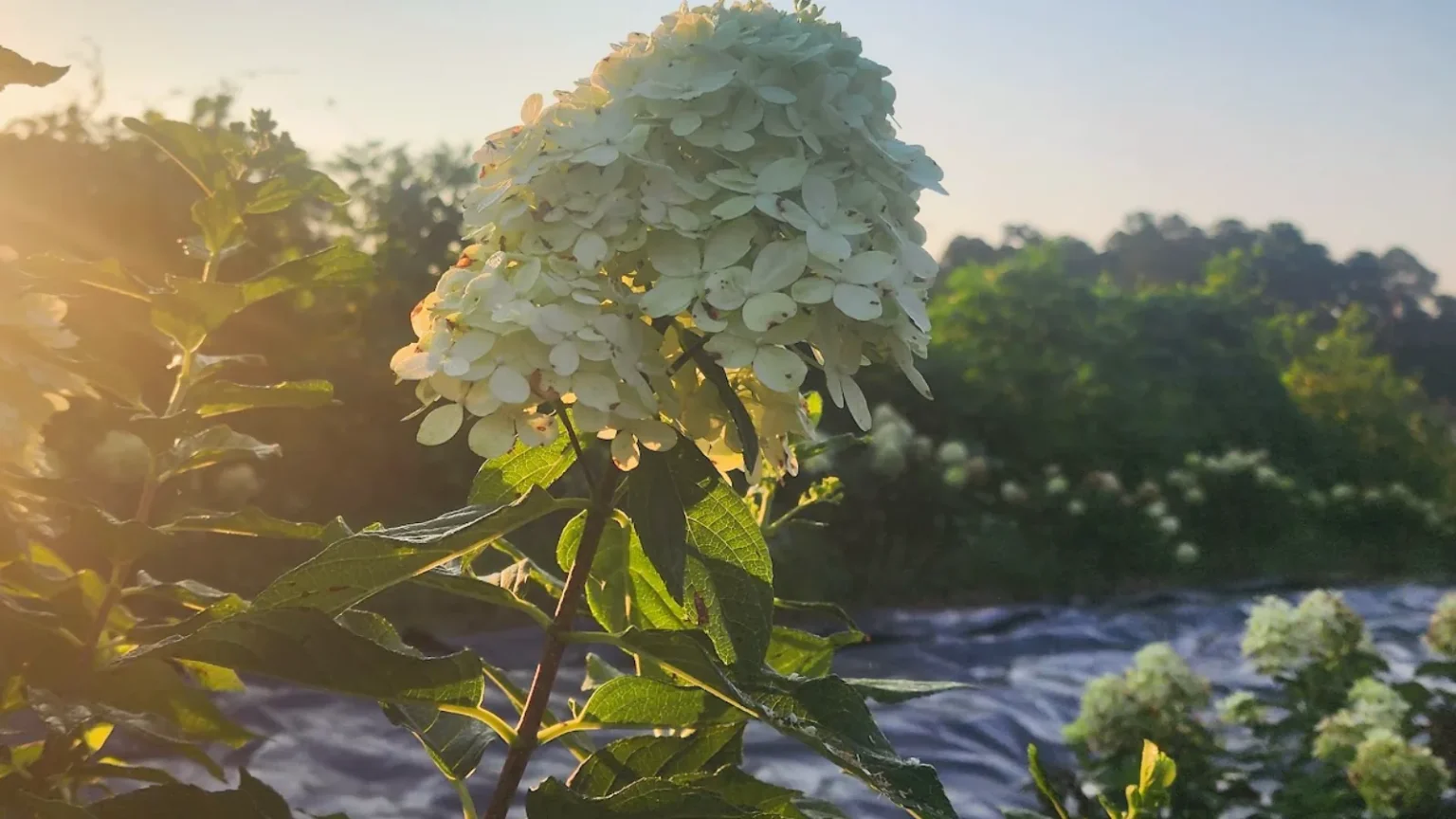
Hydrangeas are shrubs with big, rounded or cone-shaped flower heads. Mophead types turn blue in acidic soil and pink in alkaline soil, and panicle types slowly turn from white to blush and rose as the weather cools. They’re grown for beauty only: not a good snack.
Our Varieties
- Limelight: panicle type, lime-green aging to pink (only type available in 2026)
- Firelight: panicle type, starting out white and aging to a soft pomegranate red (coming 2027)
- Puffer Fish: Midseason white blooms (coming 2027)
- Little Lime Punch: a mix of lime green, white, pink, and dark pink blooms all on one (coming 2027)
When Will It Bloom at the Hollow?
Hydrangeas are shrubs, so they come back every year. Limelight opens in July and keeps changing color through September and October. Puffer Fish will bloom a little later in the season. Little Lime Punch starts off in early summer, but then turns Hawaiian Punch-red, and then it reblooms.
How to Know When It’s Ready
Fresh, soft new blooms wilt quickly when cut. Wait until the flower head is mature: the small florets are fully open and the head feels slightly papery to the touch.
- All florets fully open
- Head feels a little papery
- Cut in the cool of the morning
How to Cut It
Cut the stem just above a set of leaves and put it straight into water. You can also dip the cut ends in very hot water for about 30 seconds to help the woody stems take up water.
Making It Last in the Vase
Strip the leaves and recut the stems often. Hydrangeas drink through their petals as well as their stems, so if a bloom wilts, submerge the whole head in cool water for an hour to revive it. Expect about a week in the vase.
Drying for Preservation
Hydrangeas are one of the easiest flowers to dry, as long as they’re cut late in their season, when the heads feel papery.
- The vase method: stand the stems in a vase with an inch or two of water and let it slowly evaporate. Over a couple of weeks the blooms dry in place, keeping their shape and soft, vintage colors.
- Hang to dry: hang single stems upside down somewhere dark, dry, and airy.
- Use: dried heads are beautiful in wreaths and fall arrangements.